
Following the money in Cape Ann's school kitchens
What Gloucester, Rockport and Manchester Essex spend to feed students, who supplies the food, and what the state's reviews of their meal programs found.

This is the second part of our look at school meals on Cape Ann. Part one covers what free breakfast and lunch are worth to students and families.

Following the money
School meals are paid for mostly by federal and state reimbursements for each meal served, which flow into a separate food service fund in each district. This school year the federal government pays $4.76 for each free lunch and $2.54 for each free breakfast, and Massachusetts adds state money on top. For one student, that adds up quickly:
Here is what the districts spend, according to the state education department's financial reports:
| District | Food service spending, FY25 | Per student |
|---|---|---|
| Gloucester | $1.71 million | $598 |
| Rockport | $563,000 | $902 |
| Manchester Essex | $628,000 | $528 |
Rockport spends more per student than most districts in the state: the median Massachusetts district spent $669 per student on food service in 2024-25. Gloucester and Manchester Essex spent less than the median. Spending per student was higher in all three districts in 2023-24 than before free meals for all began in the fall of 2022. Use the chart to compare the districts over a decade, and to see how much of the cost came out of each district's general budget:
Statewide, more students eat school meals every year:
Gloucester runs its own kitchens. Its school budget projects $1.8 million in federal and state meal money this year, with about $850,000 going to food and $870,000 to salaries. Meals served rose about 12 percent in the fall after the district joined the federal community eligibility program, according to a December 2023 finance report: from 116,331 meals in the fall of 2022 to 129,879 a year later. State records show the city's schools put $337,000 of general operating money into food service in 2020-21, during the pandemic, and almost none in the three years since meals became free for everyone.
Gloucester's split between food and salaries is close to the national pattern. A USDA study of school meal costs found food and labor each make up about 45 percent of what the average program spends:
Rockport also runs its own kitchens, and spends the most per student of the three. State records show the town's schools have put $68,000 to $118,000 a year of general operating money into food service on top of meal reimbursements every year for the last decade, including $95,000 in 2024-25. Rockport's budget books list a food service subsidy of $1,000 or less; the public budget documents we reviewed do not explain the difference.
Manchester Essex contracts its food service to Chartwells K12, the school dining division of Compass Group, a British food service company with $46 billion in annual revenue. The district's budget book says all costs of the outsourced program are paid from its lunch fund, about $595,000 to $618,000 a year. State records show the district also charged $39,000 to $72,000 a year of general operating money to food service over the last five years; the budget book does not say what those charges cover. School committee minutes show the contract is renewed year to year, that the committee has covered food service deficits from other savings in past years, and that a student civics class wrote the committee this spring about cafeteria offerings. The district's finance director said in June the district is working with Chartwells to improve the program. The budget documents we reviewed do not include the contract's terms.
Chartwells' parent has faced questions elsewhere about how it handles money it saves. In 2012, Compass Group paid $18 million to settle New York Attorney General findings that Chartwells had not passed vendor rebates through to 39 New York school districts from 2003 to 2010. In 2015, Chartwells and a partner paid $19.4 million to settle a District of Columbia case over its contracts with the city's public schools. Nothing in the public record suggests problems with the Manchester Essex contract, and the documents we reviewed do not say how it handles rebates or the value of the federal food the district receives.
The state's reviews
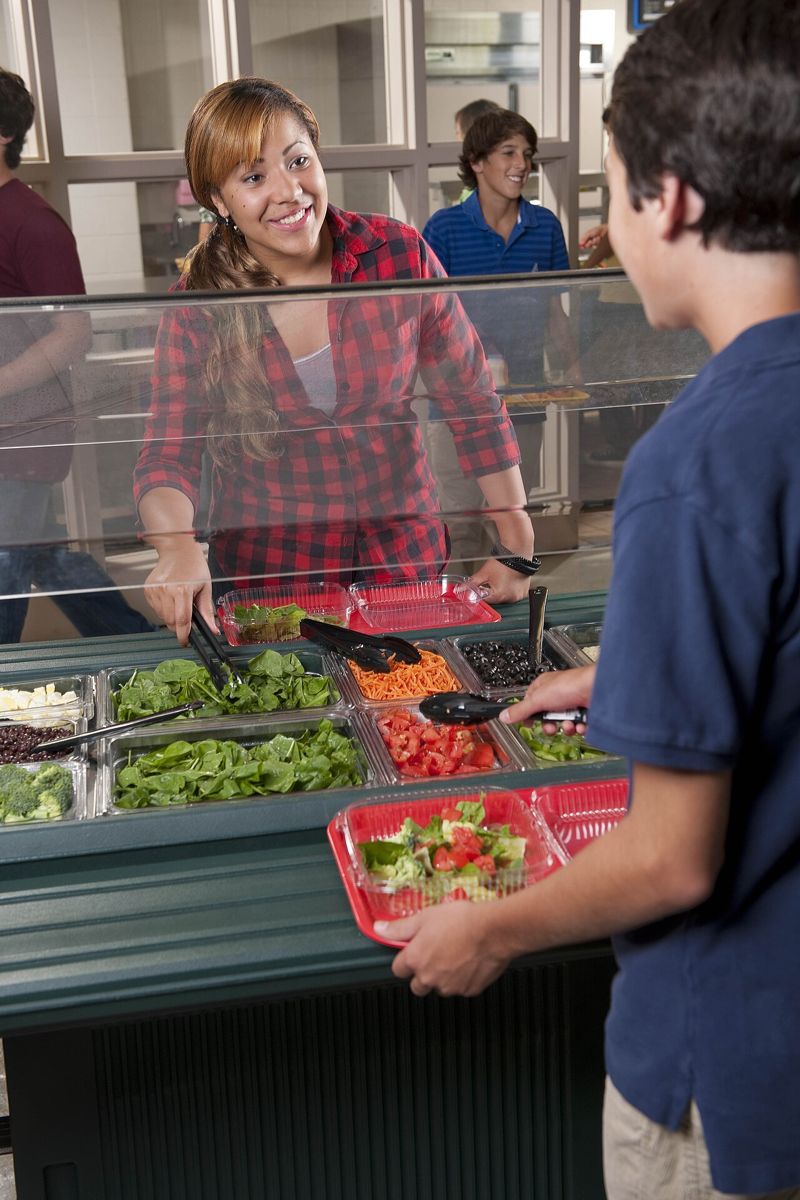
Massachusetts reviews every district's meal program on a regular cycle. Gloucester's review in January 2024 and Rockport's in January 2025 both found areas needing correction, according to summaries the state posted. Gloucester's flagged how lunch counts were recorded and claimed, menus that did not match what was planned, and food safety paperwork such as temperature logs. Rockport's flagged eligibility paperwork, storage and vending items that did not meet nutrition standards. Both reviews also praised the programs: reviewers noted Gloucester's clean kitchens and pleasant staff and Rockport's "vibrant and inviting salad bar." The state's summaries do not say what changed afterward.
What we still want to know
Public records leave several questions open:
- Gloucester: what changed after the state's January 2024 review.
- Rockport: why its budget books and state records differ on how much general school money goes to food service, and what changed after the January 2025 review.
- Manchester Essex: the terms of the Chartwells contract, how rebates and the value of federal food are credited to the district, and what the general budget charges to food service cover.
If the districts answer, we will add their responses here. School officials and readers can write to [email protected].
Sources
- RecordDESE: Universal free school meals legislative report (July 1, 2024)
- RecordMass.gov: 8.3 million more school meals being served in Massachusetts (July 8, 2025)
- RecordMass.gov: School breakfast and student food security (Mar. 13, 2026)
- RecordMassachusetts Legislature: FY27 budget release (July 1, 2026)
- RecordDESE: Community Eligibility Provision school list (Apr. 30, 2025)
- RecordDESE school and district profiles, 2025-26 enrollment and selected populations
- RecordGloucester Public Schools Food Services
- RecordRockport Public Schools Food Service
- RecordManchester Essex Regional School District Food Service
- RecordMass.gov: MA FRESH grants for locally grown food (Dec. 10, 2025)
- SourceBackyard Growers: School programs
- SourceProject Bread: School meals program
- RecordUSDA: School Nutrition and Meal Cost Study (2019)
- RecordUSDA Economic Research Service: School meals support food security and good nutrition (May 3, 2021)
- RecordCDC: School meals
- SourceSchwartz and Rothbart, Journal of Policy Analysis and Management (2020)
- SourceRuffini, Journal of Human Resources (2022)
- SourceLocalio et al., Pediatrics (Mar. 18, 2024)
- RecordUSDA final rule: meal patterns consistent with the 2020-2025 Dietary Guidelines (Apr. 25, 2024)
- RecordUSDA: National School Lunch Program meal pattern
- RecordUSDA: Whole Milk for Healthy Kids Act final rule (May 8, 2026)
- RecordGloucester school menus with nutrition facts (MealViewer)
- RecordManchester Essex school menus with nutrition facts (Nutrislice)
- RecordThe Open Door: Summer Meals for Kids 2026
- RecordUSDA: National average payments for school meals, SY2026-27 (Federal Register, July 16, 2026)
- RecordUSDA Food and Nutrition Service: Child nutrition program data, state level (as of Sept. 11, 2026)
- RecordUSDA 2023 Farm to School Census, public use file
- RecordUSDA school breakfast meal pattern
- SourcePhotos: USDA via Wikimedia Commons (public domain): Boston lunch tray, fruit cups, vegetable line
- RecordDESE: District expenditures by function code (Food Services, 3400)
- RecordGloucester Public Schools FY26 approved budget book
- RecordGloucester School Committee Building and Finance packet (Dec. 18, 2023)
- RecordRockport Public Schools FY27 budget book
- RecordMERSD FY27 budget book
- RecordMERSD School Committee minutes (Sept. 20, 2022)
- RecordMERSD School Committee minutes (June 2, 2026)
- RecordCompass Group FY2025 results
- RecordNew York Attorney General: $18 million settlement with Compass Group USA (Sept. 19, 2012)
- RecordD.C. Attorney General: $19.4 million settlement over school food contracts (June 5, 2015)
- RecordDESE administrative review summary, Gloucester (Jan. 23, 2024)
- RecordDESE administrative review summary, Rockport (Jan. 21, 2025)
- RecordUSDA School Nutrition and Meal Cost Study, Volume 3 summary: school meal costs and revenues (2019)
- SourcePhotos: USDA Team Nutrition via Wikimedia Commons (public domain): students at lunch, salad bar, Maine lunch tray
_(20221028-FNS-RC-0005).jpg)
_(20210805-FNS-PH-0004).jpg)
See something wrong? Email [email protected]. Read our standards and corrections policy.