
Manchester's new trash carts: who pays more, who pays less and how the neighbors compare
Orange bags are gone from the curb. Most homes now pay $100 a year for a 35-gallon cart. Light users pay more than before, heavier users less, and taxes cover a bigger share. Price your household, compare Gloucester, Hamilton, Ipswich, Rockport and Essex, and look up where anything goes.
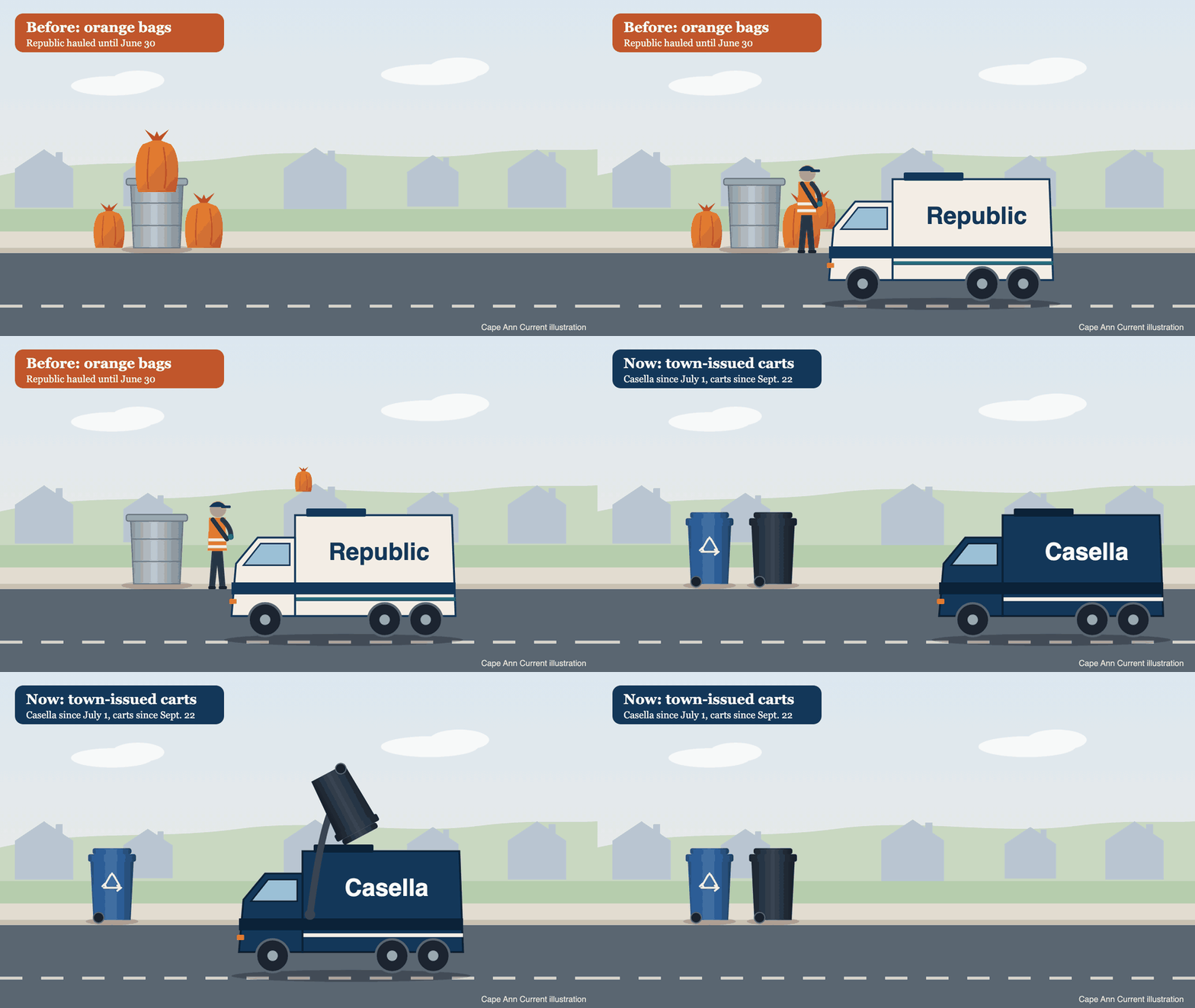
Orange trash bags are gone from Manchester's curbs. Since Sept. 22, trash goes in town-issued carts that a Casella truck lifts with a mechanical arm, and most households will see a $100 yearly charge on their water and sewer bill starting in November.
Is that a good deal? It depends mostly on how much trash your household makes. Below you can price your own household, compare five neighboring towns on price and service, see how much each town throws away, and look up where anything goes.
What changed
The town's five-year contract with Republic Services ended June 30, and a new contract with Casella began July 1. The Select Board approved the new program July 20. Recycling moved from weekly to every other week in August. Carts arrived in September, and automated pickup began Sept. 22 on Tuesdays and Wednesdays.
The town gave its reasons at a July 14 information session: the industry is moving to automated trucks and uniform carts, which the town said are safer for workers, more efficient and keep streets cleaner.
What you pay now
The fee is added to the quarterly water and sewer bill. The first charge appears on the November bill. Every home got the standard package unless it chose another by Aug. 17.
- Standard: one 35-gallon trash cart and one 65-gallon recycling cart, $100 a year.
- Bigger recycling cart: one 35-gallon trash cart and one 96-gallon recycling cart, $125.
- Two trash carts: two 35-gallon trash carts with a 65-gallon recycling cart, $175, or with a 96-gallon recycling cart, $200.
- Age 65 or older, or limited mobility: a smaller 35-gallon recycling cart, at the same prices ($100 for one trash cart, $175 for two).
- Opt out: $0, using only the transfer station.
Cart sizes cannot be changed now. The town plans an order period in winter 2027.
Trash that does not fit in the cart is not picked up. It can go to the transfer station at 201 Pine St. in orange bags, which are still sold at Crosby's, Richdale, Allen's Pharmacy, Manchester Hardware and Magnolia Variety. The transfer station is open Thursdays from 7:30 a.m. to 3 p.m. and Saturdays from 10 a.m. to 3 p.m. Cars need the town's resident sticker, which the town mails each year to residents whose vehicles are registered in Manchester and which also covers resident parking and Singing Beach. New residents get one from the town clerk.
Will I pay more?
Under the old system a large orange bag cost $3.30 and a small one $2.20. That made trash cost exactly what you threw away. A household that put out one large bag a week paid about $171.60 a year. Under the carts it pays $100, saving about $72.
A household that put out one bag a month paid about $39.60. It now pays $100, about $60 more. The break-even point is about 30 large bags a year, or roughly one every 12 days.
What the town pays, and who covers it
The household fee is only part of the cost. At the July 14 session the town put the yearly cost of collection and disposal at $930,039. Before the switch, orange bag sales paid about 36% of it and the general fund, which is mostly property taxes, paid about 64%.
The town estimated bag sales at about $335,000 a year. Its case counts show bag revenue of $295,460 in 2024 and $384,340 in 2025. The town estimated the standard cart fee would bring in about $220,000. That estimate came before the final price list, and the town has not published a new one. If it holds, fees will raise less than bags did, and taxes will cover the difference unless costs come down.
Costs are going up. The town budget for trash, recycling and sanitation for the year that began July 1 is $960,039, up from $680,000 last year. Collection alone rose from $365,000 to $633,039. The Finance Committee listed the trash contract as a major cost driver. The town has not posted the signed Casella contract or its price.
What neighbors pay, and what they get
Every town in this comparison picks up recycling at no extra charge, and every one charges something for trash. They differ in whether the charge is a yearly fee, a price per bag or part of the tax bill.
- Gloucester switched to Casella carts on Oct. 1. Every eligible home was enrolled in the standard service, a 65-gallon trash cart for $300 a year, unless it asked to size down to a 35-gallon cart for $200. The city has not said how many households sized down. Residents 65 and older get half off at their own home. Extra bags are not collected; an extra cart costs $75 plus its yearly fee. The city's general fund pays about half the cost. There is no city food scrap pickup.
- Hamilton gives each home one 35-gallon bin collected weekly with no separate fee. Extra trash goes in blue town bags, $2.50 for 33 gallons, with no limit. Curbside food scrap collection is weekly and required.
- Ipswich collects one 35-gallon bag or barrel a week with no separate fee. Extra trash goes in $2 overthrow bags. Recycling is weekly and required.
- Rockport has no curbside trash. Residents buy a $140 transfer station sticker ($90 for seniors) and pay for every bag, $30 for ten 35-gallon bags.
- Essex has no curbside trash either. Its last posted sticker price was $150 ($75 for seniors), and bags are $4 for 33 gallons. The town has not posted its current sticker price.
Hamilton and Ipswich charge no fee for the first bin, but that pickup is not free. It is paid from property taxes. Hamilton budgeted $1,148,552 for trash, recycling and compost this year, about $427 for each of the 2,692 households its program serves. Ipswich's town manager budgeted $1,729,441, about $339 per household.
Counted the same way, Manchester's $960,039 budget works out to about $422 per household, with about $97 of that covered by the new fee if the town's revenue estimate holds and about $325 left for taxes. Gloucester's $4.92 million budget is about $358 per household, about $182 from fees and $176 from taxes.
These are town averages, not anyone's tax bill, which depends on a home's assessed value. The calculator above adds each town's average budget share to what you pay directly, so the totals can be compared.
How we figured it
Take Gloucester as an example. The city budgeted $4,921,900 for trash and recycling this year. Its public works director estimated the new cart fees will bring in about $2.5 million. The remaining $2,421,900 comes from the city's general fund, which is mostly property taxes but also includes state aid and other local revenue. Divided among the 13,750 households in the city program, that is about $176 each. The city's chief administrative officer has said the general fund pays about half the cost of trash service, which matches.
The average fee works out to about $182, not $300, because seniors pay half, some homes chose the $200 cart and some opted out for a private hauler.
The estimates move with the inputs. Gloucester's public works director also put this year's contract cost at about $4.6 million, below the budget figure; using that, the general fund share is about $153 per household. Budget lines can also include costs beyond curbside pickup, such as trash from town buildings.
Will removing the bag charge increase trash?
Manchester has been one of the lightest trash towns around. In 2025, the last full year of orange bags, its program collected about 964 tons of trash from 2,274 households, according to the town's report to the state Department of Environmental Protection. That is about 848 pounds per household, the lowest of the towns compared here.
Statewide, towns that charge by the bag throw away less. MassDEP's 2025 figures put towns with bag fees at about 1,022 to 1,113 pounds per household. Towns with 35-gallon carts averaged 1,352 pounds, and the number rises with cart size.
Those averages compare different towns, so they show a pattern, not proof of what will happen in Manchester. Two things work in Manchester's favor: the cart is small, and overflow still costs money and a trip to the transfer station. Hamilton, with a 35-gallon bin and paid overflow bags, reported 897 pounds per household in 2025.
The real test will come from Manchester's own numbers after the switch. State data runs only through 2025. To judge the change fairly, monthly tonnage needs to be compared with the same months a year earlier and divided by households served, since trash rises every summer. The town has not published monthly figures.
What happens to recycling and compost
Recycling is now picked up every other week in a 65 or 96-gallon cart, instead of weekly in any labeled bin. The town said in July that keeping weekly recycling would cost about $70,000 more a year. Recycling is still free at the transfer station.
Curbside food scrap pickup by Black Earth has not changed. It is free and weekly, alongside trash. The town says 30% to 40% of what used to go in orange bags was food waste, and its compost program has brought in more than $65,000 in state grants.
Manchester's trash is burned, and recycling goes to a separate processing center, so the two should not be mixed.
Where does it go?
How the switch is going
Who to call
- Casella, for missed pickups and bulk items: 978-278-3122
- Manchester DPW, for wrong or broken carts and everything else: 978-526-1242 or [email protected]
Earlier coverage
- Casella takes over Gloucester trash pickup Thursday as purple bags end (Oct. 1), on Gloucester's contract and fees
- Gloucester carts bunched at the curb on Casella's first pickup day (Oct. 1), with a guide to setting out carts
Later coverage: what trash costs in Gloucester, Rockport and Essex, with each town's budget and household costs.
Sources
- RecordTown of Manchester-by-the-Sea: Trash, Recycling and Compost (fees, schedule, FAQ, transfer station, bulk items)
- RecordTown of Manchester-by-the-Sea: Residential Waste Collection Transition, community information session presentation (July 14, 2026)
- RecordTown administrator's homepage updates: 'Manchester Signs New Waste Management Contract' (July 31, 2026) and 'The Trash Bins Are Here!' (Sept. 11, 2026)
- RecordTown of Manchester-by-the-Sea: Resident Parking Stickers (transfer station access)
- RecordTown of Manchester-by-the-Sea: 2026 Comprehensive Disposal List
- RecordManchester-by-the-Sea FY2027 Tentative Budget Proposal, Revision 9 (March 26, 2026)
- RecordManchester Finance Committee minutes, Jan. 23, 2025 (sanitation budget, contracts)
- Also reportedThe Manchester Cricket: Manchester Signs New Waste Management Contract
- RecordCity of Gloucester: New Trash & Recycling Program
- RecordCity of Gloucester: Residential Trash & Recycling Program Information
- RecordCity of Gloucester: Additional Cart Purchase Information
- RecordTown of Hamilton: Trash Information (updated Aug. 10, 2026)
- RecordTown of Hamilton: Composting Program
- RecordTown of Ipswich: Public Works FAQs (overthrow bags, one-barrel limit)
- RecordTown of Ipswich: 2026 Recycling/Trash calendar
- RecordTown of Hamilton: FY2025 Annual Town Report and FY2027 Budget (Sanitation, $1,148,552)
- RecordTown of Hamilton: April 16, 2026 annual town election results (override question)
- RecordTown of Ipswich: FY2027 Town Manager Recommended Budget (Sanitation 431, $1,729,441)
- RecordTown of Rockport: 2026-2027 sticker application (transfer station)
- RecordTown of Rockport: PAYT bag prices (FAQ)
- RecordTown of Essex: Transfer Station (bag prices, hours)
- RecordTown of Essex: transfer station sticker application
- RecordMassDEP: Municipal Solid Waste & Recycling Survey Responses, 2023, 2024 and 2025
- RecordMassDEP: Size Matters! trash per household by program type (2025 surveys)
- RecordMassDEP: How Much Trash Did We Throw Out? maps, 2011 to present
See something wrong? Email [email protected]. Read our standards and corrections policy.