
35 years later, remembering the six men of the Andrea Gail
Six men left Gloucester for the Grand Banks in September 1991 and never came home. The city still remembers them.
· Wednesday, October 28

Trust Check: Checked against public records
Thirty-five years ago this month, six men aboard the Gloucester swordfishing boat Andrea Gail were on their way home from the Grand Banks when a storm of rare strength gathered over the North Atlantic. Their last radio contact came on Oct. 28, 1991. They were never heard from again.
They were Frank W. "Billy" Tyne Jr., the captain, and Robert F. Shatford, David Sullivan, Alfred Pierre, Dale R. Murphy and Michael Moran, who worked the deck.
Gloucester has sent its people to sea for nearly four centuries, and it has a long way of remembering the ones who did not come home. On Stacy Boulevard, the bronze fisherman at the wheel looks out over the harbor above the words "They that go down to the sea in ships." The names of the six men of the Andrea Gail are among those the city keeps there.
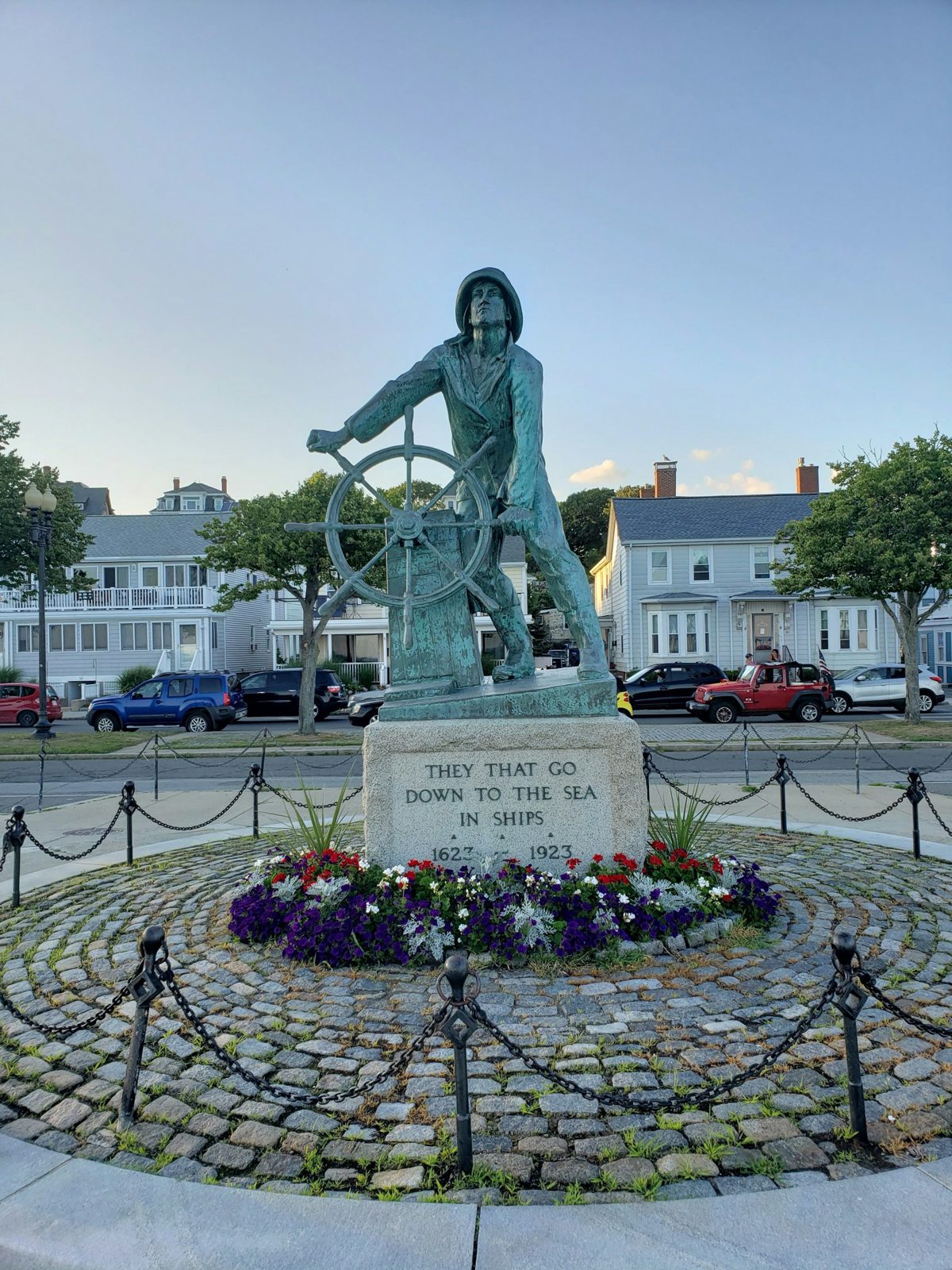
The public record holds very little about them: their names, their places on the boat, the date the city entered for their loss. Who they were at home and on the waterfront, the work they were proud of, the people they loved and the stories still told about them, was never written into any official record. It lives with the families and friends who knew them.
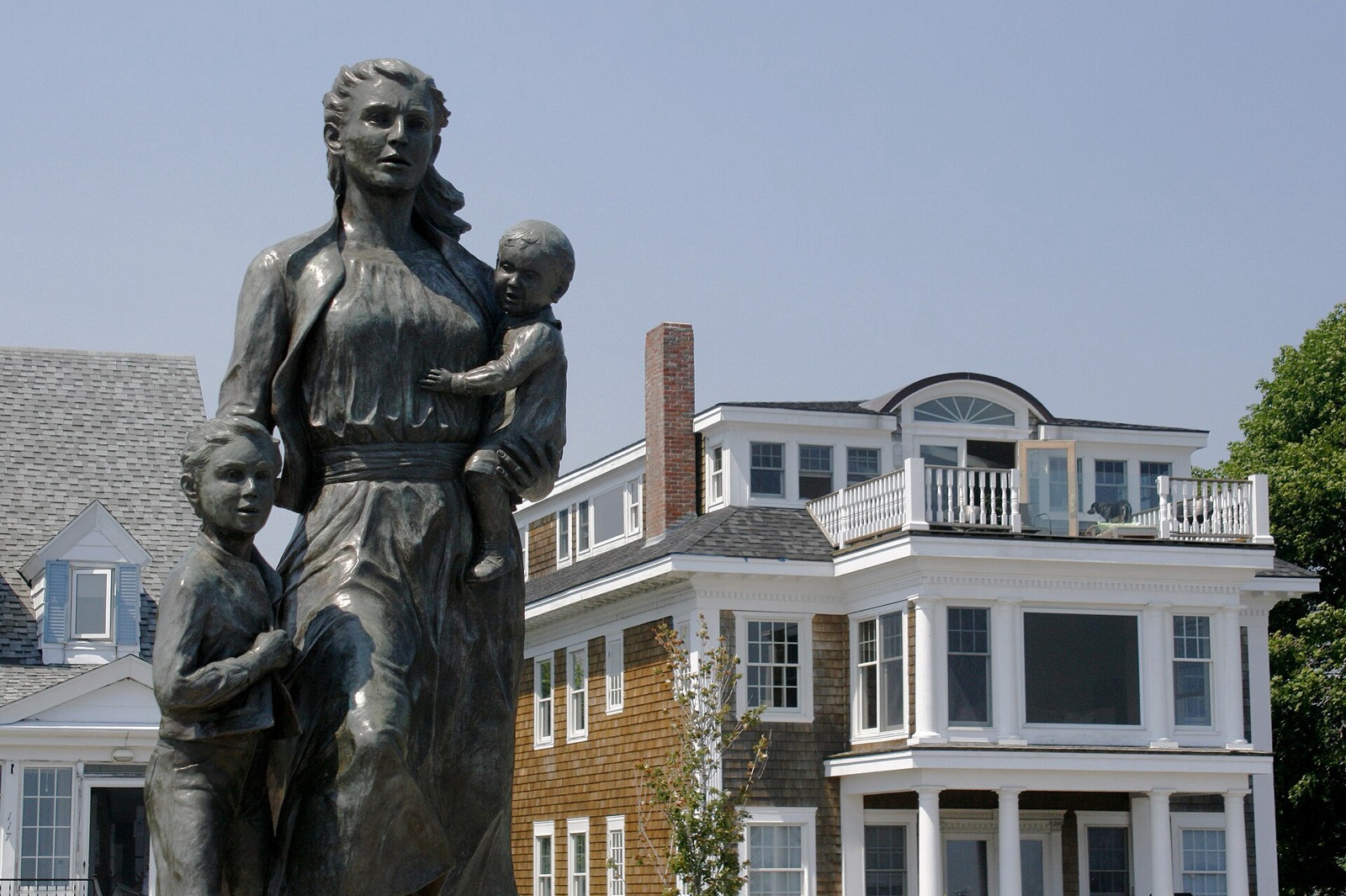

Thirty-five years on, the Cape Ann Current joins Gloucester in remembering the crew of the Andrea Gail.
This account of their last trip is drawn from public records, chiefly the U.S. Coast Guard's report on its investigation of the loss, dated December 1993. Their loss later became the subject of a best-selling book and a Hollywood film, both of which imagined events that no one survived to describe. The records tell a plainer story, and they leave some questions open.
The trip
The Andrea Gail was a steel fishing boat built in Panama City, Fla., in 1978 and owned by the Sea Gale Corp. of Gloucester. She left Gloucester Harbor in late September 1991 with a crew of six and supplies for a swordfishing trip of 40 to 50 days on the Grand Banks off Newfoundland.
By Oct. 26 or 27 the boat had started for home. At about 3:15 p.m. Eastern time on Oct. 27, the crew radioed the Canadian Coast Guard station at St. John's, Newfoundland, to report that they were entering Canadian waters, bound for New England with their fishing gear stowed.
The next day, Oct. 28, the Andrea Gail spoke by radio with another swordfishing boat, the Hannah Boden. Her reported position was roughly 140 nautical miles east of Sable Island, an island far off the coast of Nova Scotia. The Coast Guard report says she was "experiencing thirty foot waves and winds from fifty to eighty knots."
It was the last time anyone heard from her. Over the next two days, the boat's owner, Robert Brown, and the crew of the Hannah Boden tried to reach the Andrea Gail by radio and could not. At about 6:15 p.m. on Oct. 30, Brown reported her overdue to the Coast Guard in Boston. No distress call was ever received.
The storm
On Oct. 27, forecasters at what is now NOAA's Ocean Prediction Center warned that a major storm would develop within 36 hours, and a high seas forecast issued Oct. 28 called it a dangerous storm. Canadian weather buoys in the area where the Andrea Gail was last reported recorded waves of more than 60 feet between Oct. 28 and 30, and winds of more than 100 knots, according to the Coast Guard report.
Bob Case, a National Weather Service meteorologist in Boston, later explained how three weather systems came together: a low-pressure system along a cold front that moved southeast of Nova Scotia, a strong high-pressure system over southeastern Canada that fed it cold, dry air from the north and the remains of Hurricane Grace moving up from the south. In Case's words, as published by the National Oceanic and Atmospheric Administration, the dying hurricane "delivered immeasurable tropical energy to create the perfect storm." The storm reached its peak on Oct. 30, about 340 miles south of Halifax, Nova Scotia, according to the National Park Service.
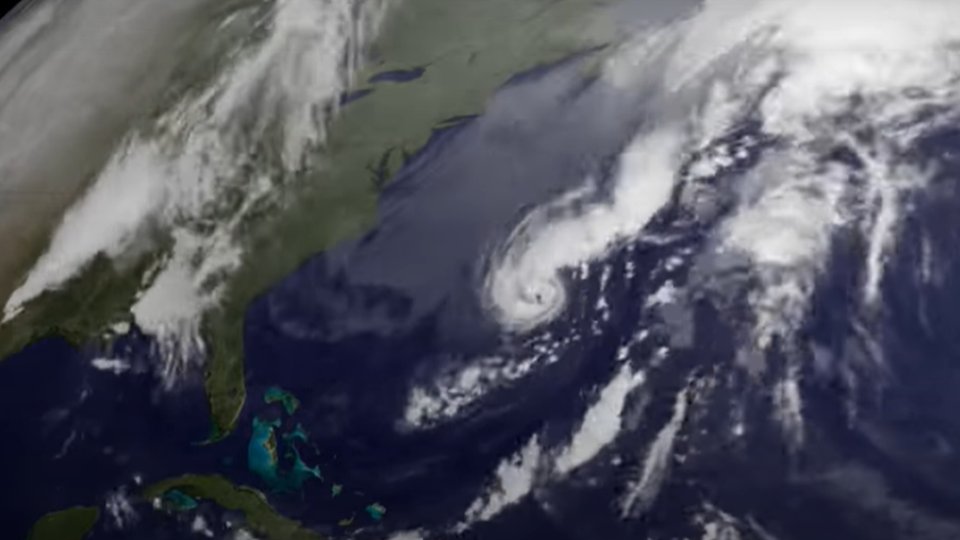
Case's phrase gave the storm the name most people know it by. Sebastian Junger used it as the title of his 1997 book about the Andrea Gail, and a film of the same name followed in 2000.
The search
The Coast Guard began searching on Oct. 31. Through Nov. 9, ships and planes from the United States and Canada searched more than 109,000 square miles of ocean, from the Grand Banks to Cape Cod. The Coast Guard counted 23 of its own units, eight Coast Guard aircraft, three Navy aircraft, three Canadian aircraft and one Marine Corps aircraft. The planes flew 41 sorties and logged 180.6 hours of searching, and two Canadian ships searched for more than 150 hours.
On Nov. 6, Canadian rescue crews searching the shoreline of Sable Island found the Andrea Gail's emergency radio beacon on the southwest corner of the island, along with a propane cylinder and a beacon used to mark fishing gear. When the beacon reached the Coast Guard in Boston, its switch was off; those who first examined it had not confirmed the setting. Tests in March 1992 showed it still worked, and investigators could not determine whether it was on when the boat was lost. No signal from it was ever received.
On Nov. 8, the crew of the Hannah Boden reported seeing a white fuel barrel marked "A.G." floating south of Nova Scotia. It could not be recovered.
Late on Nov. 9, the search was suspended "due to the low probability of crew survival." The Andrea Gail and her crew have never been found.
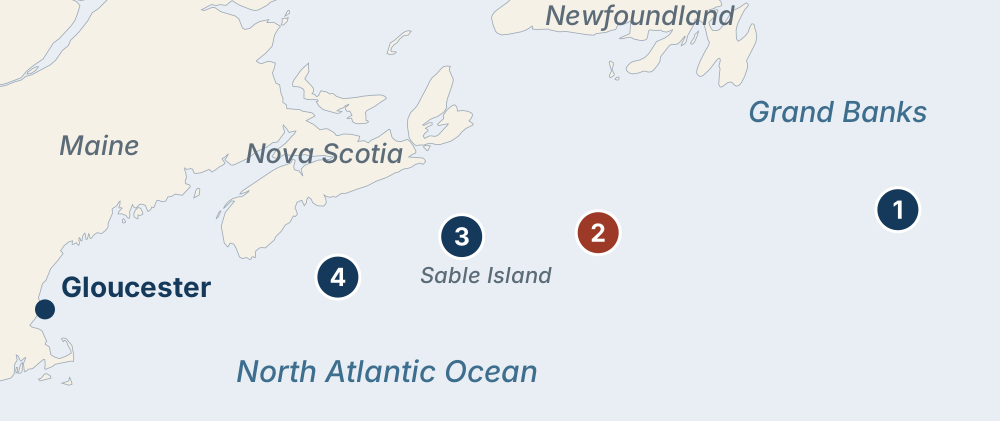
In the city's Lost at Sea register, the six names share a single line of explanation: "entire crew of 6 lost w/vessel." Across nearly four centuries of records, the register lists the Andrea Gail among 17 vessels lost with all hands in an October. You can see them below, with the people the register lists for each.
Source: Cape Ann Current. Sources and reuse rules.
What the Coast Guard found
The Coast Guard's report said the cause of the loss "cannot be determined due to the absence of the vessel, or survivors." It concluded that she most probably sank by capsizing or by flooding, and that the extreme weather was probably a contributing cause.
The report also noted that no stability review had been done after the boat was modified in 1987, and that federal rules at the time did not require one for a boat her size. It recommended that the Coast Guard consider minimum stability standards for fishing boats working far offshore, whatever their size. In response, the Coast Guard commandant partly agreed, calling the stability of smaller fishing boats a major concern, and noted that the question was under review by the Commercial Fishing Industry Vessel Advisory Committee.
Lost and never forgotten.
If you knew any of the men of the Andrea Gail and would like to share a memory of them, we would be honored to hear from you through our maritime corrections and additions page. You can find the six men, with the other losses recorded in October, on our maritime anniversaries page, or search the city's register in our maritime archive.
Sources
- RecordU.S. Coast Guard, Investigation into the circumstances surrounding the disappearance of the F/V Andrea Gail in the North Atlantic Ocean, between 28 and 30 October 1991 (report dated Dec. 17, 1993)
- RecordCity of Gloucester, Lost at Sea register (PDF dated July 29, 2010)
- RecordNOAA, The Halloween Storm, Also Known as "The Perfect Storm" (1991)
- RecordNOAA Ocean Prediction Center, The Ocean Prediction Center and The Perfect Storm
- RecordGloucester Fishermen's Wives Association, Memorial
- SourceNational Park Service, The Perfect Storm (1991)
Do you trust this story?
See something wrong? Email [email protected]. Read our standards and corrections policy.