
Cape Ann schools then and now: 16 in 1986, 13 today
In the fall of 1986 the three Cape Ann school districts ran 16 schools. Today they run 13, and three elementary schools are in buildings opened since 2016. Here is every school then and now. Schools series, Part 5.

· Saturday, November 21 · Updated Saturday, November 21

Trust Check: Checked against public records
Schools series, Part 5: then and now
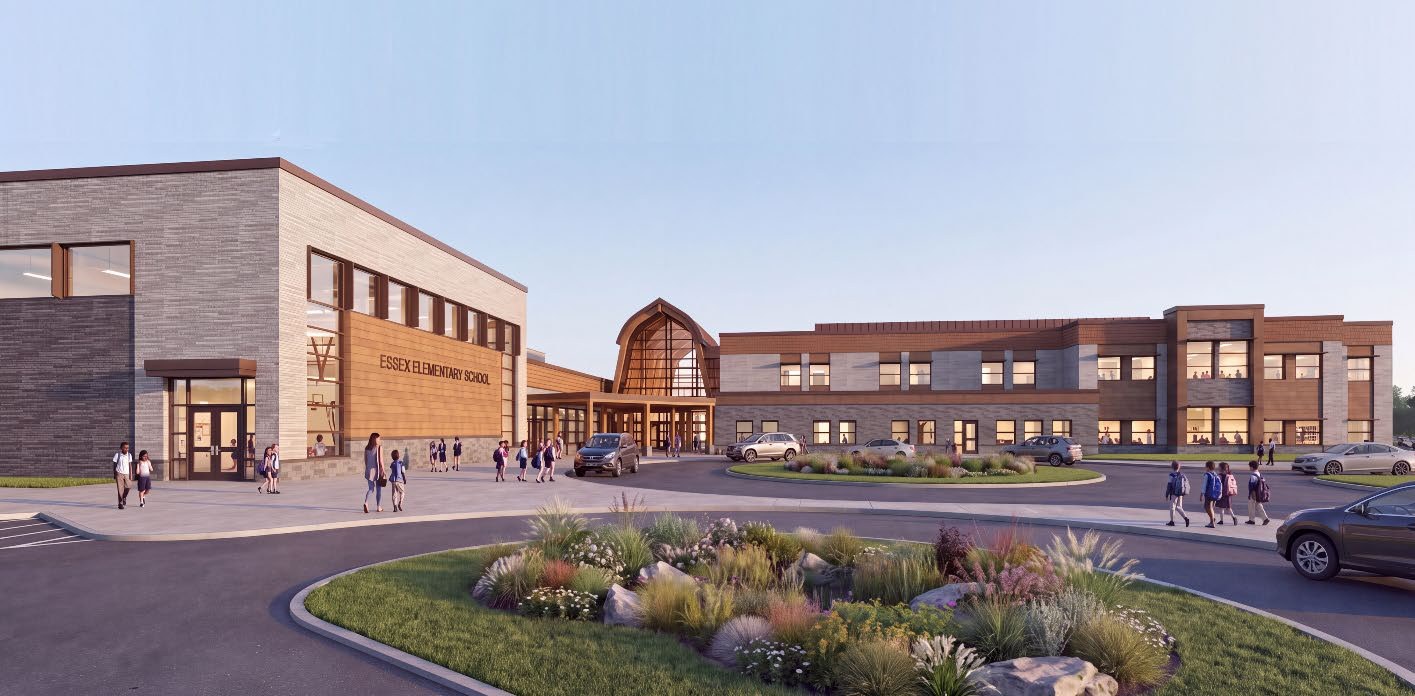
In the fall of 1986, the three Cape Ann school districts ran 16 schools for 5,711 students. In the 2025 to 26 school year they ran 13 for 4,558. Three of today's elementary schools are in buildings opened since 2016: West Parish and East Veterans in Gloucester and Memorial in Manchester-by-the-Sea. A fourth, a new Essex Elementary School, won approval at both town meetings on Nov. 16. It goes to the ballot in Essex and Manchester-by-the-Sea on Dec. 10.
No district has a plan to close or combine a school today, as Part 1 of this series reported. This story looks back. It sets every school from 1986 next to the same school today. It makes no recommendation about any school.
School enrollment and school buildings are important parts of local education and budget decisions. This comparison is intended to show how Cape Ann's schools have changed over time, not to suggest what any community should do next. Changes in grade levels, district organization, educational programs and building requirements mean that historical school counts and enrollment figures cannot, by themselves, establish whether a community needs more or fewer schools.
Reader poll
Did you go to school here? Tap where you went to school, pick your schools, then see how other readers answered.
Loading the poll...
| District | Schools, 1986 | Schools, 2025 to 26 | Students, 1986 | Students, 2025 to 26 | Change in students |
|---|---|---|---|---|---|
| Gloucester | 8 | 7 | 3,773 | 2,780 | down 26% |
| Rockport | 5 | 2 | 905 | 622 | down 31% |
| Manchester and Essex | 3 | 4 | 1,033 | 1,156 | up 12% |
| Cape Ann, all three | 16 | 13 | 5,711 | 4,558 | down 20% |
Sources: fall 1986, National Center for Education Statistics, Common Core of Data. 2025 to 26, Massachusetts DESE Enrollment by Grade, Oct. 1, 2025 count. Unit: schools as each list names them, and students (headcount). Why this comparison: each district is set against itself. The regional middle and high schools count as two schools, though they share one building. Missing: Manchester and Essex were two separate districts in 1986, so their 1986 line adds the two. Tap a column heading to sort.
This is Part 5 of the Current's schools series. Part 1 showed enrollment by town, district and school since the 1970s. Part 2 looked at what fewer students could change in staffing, buildings and budgets. This part starts with the oldest school by school list on file, a federal one from the fall of 1986. It sets every school next to the state's count from October 2025. The counts are schools as the state and federal governments list them, not buildings. Two schools can share one building, as the regional middle and high schools in Manchester-by-the-Sea do.
First, the statewide picture
School enrollment in Massachusetts has moved in waves. Public schools statewide had 1,210,100 students in the fall of 1974. The count fell every year for 14 years, to 823,428 in the fall of 1988, a drop of 32%. Then it grew for 15 years, to 983,313 in the 2002 to 03 school year. It has slipped since, to 900,487 in October 2025, about 8% below the 2003 peak and 26% below 1974.
The federal counts for individual Cape Ann districts start in the fall of 1986, near the bottom of that first wave. So the 1986 numbers below are not a peak. Gloucester grew to 4,203 students by 2000 to 01. Rockport peaked at 1,136 in 1997 to 98. Manchester Essex peaked at 1,562 in 2012 to 13.
Sources: 1970 to 1992, National Center for Education Statistics, State Comparisons of Education Statistics (NCES 98-018), Table 10, fall membership. 1993 on, Massachusetts DESE Enrollment by Grade (t8td-gens), Oct. 1 counts, as of Nov. 11, 2026. Cape Ann districts 1986 to 1992 from the NCES Common Core of Data, 1993 on from DESE. Unit: students (headcount). Why this comparison: the state series is the longest public one; the district series starts at the earliest date the federal files allow. Missing: no district counts before 1986. Manchester plus Essex before 2000 adds two separate districts.
Every school, then and now
The table lists every school the federal government recorded for the four towns in the fall of 1986 and every school the state recorded in October 2025. Tap a column heading to sort. Choose a district to narrow the list. Gray rows are schools that no longer appear in the state's school list. Green rows are schools that did not exist in 1986 or that have a new building since.
| School | District | Grades, 1986 | Students, 1986 | Grades, 2025 to 26 | Students, 2025 to 26 | What the records show |
|---|---|---|---|---|---|---|
| Gloucester High School, 32 Leslie O. Johnson Road | Gloucester | 10 to 12 | 1,352 | 9 to 12 | 769 | Open Same address in both lists. Grade 9 moved here after 1986. The assessor dates the building to 1938. |
| Ralph B. O'Maley Middle School, 32 Cherry St. | Gloucester | 7 to 9 | 540 | 6 to 8 | 594 | Open The 1986 list gives its address as Dr. Osman Babson Road, the other side of the same site. Built 1973. |
| Milton L. Fuller Middle School, Blackburn Circle | Gloucester | 4 to 6 | 793 | Not listed | 0 | Gone The state's school list, which starts in 1993 to 94, does not use the Fuller name. A January 2014 state memo places the city's preschool at the Fuller school. The YMCA now owns the parcel at 4 School House Road. |
| West Parish School, 10 Concord St. | Gloucester | K to 3 | 336 | K to 5 | 359 | Rebuilt 2016 The 1949 school was replaced on the same site. Students moved into the new building in September 2016. The 1986 address was 35 Concord St. |
| Beeman Memorial School, 138 Cherry St. | Gloucester | K to 3 | 292 | K to 5 | 296 | Open Built 1955. Four more students than in 1986, with two more grades. |
| Veterans Memorial School, 11 Webster St. | Gloucester | K to 3 | 214 | Closed | 0 | Closed 2023 Last in the state list in 2022 to 23, with 216 students. East Veterans now stands at the same address. |
| East Gloucester Elementary, Davis Street | Gloucester | K to 3 | 165 | Closed | 0 | Closed 2023 Last in the state list in 2022 to 23, with 181 students. The 1948 building at 8 Davis St. Extension is now listed under the city's public works department. |
| Plum Cove School, 15 Hickory St. | Gloucester | K to 3 | 81 | K to 5 | 226 | Open The smallest school in 1986 nearly tripled. Built 1967. |
| East Veterans Elementary, 11 Webster St. | Gloucester | Did not exist | 0 | K to 5 | 446 | Opened 2023 First in the state list in 2023 to 24, with 450 students. It replaced Veterans Memorial and East Gloucester. |
| Gloucester PreSchool | Gloucester | Did not exist | 0 | Preschool | 90 | Preschool The state code it reports under held 816 students in 1993 to 94, mostly kindergarten to grade 3. Today it reports only the 90 preschoolers. |
| Rockport Middle High School, Jerdens Lane | Rockport | 9 to 12 | 307 | 6 to 12 | 359 | Open The 1986 list calls it Sr High School, same lane. It took in the middle grades: the state listed Rockport Middle separately through 2023 to 24 (173 students), and the combined school jumped from 226 to 367 in 2024 to 25. |
| Community Middle School, Jerdens Lane | Rockport | 6 to 8 | 207 | Folded in | 0 | Combined 2024 Listed as Rockport Middle from 1994 to 95 to 2023 to 24, then joined the high school in the state's records. |
| George J. Tarr School, School Street at Broadway | Rockport | 2 to 3 | 137 | Not listed | 0 | Gone Not in the state's list, which shows one Rockport Elementary code from 1993 to 94 on. |
| Intermediate Unit, 4 Broadway | Rockport | 4 to 5 | 128 | Not listed | 0 | Gone Not in the state's list. |
| Pigeon Cove Primary Unit, Story Street | Rockport | K to 1 | 126 | Not listed | 0 | Gone Not in the state's list. Grades K to 5 now attend one school on Jerdens Lane. |
| Rockport Elementary School, Jerdens Lane | Rockport | Three schools, listed above | (391) | Preschool to 5 | 263 | Combined 1986 total, not an additional school The 391 adds Tarr, Intermediate and Pigeon Cove, which have their own rows above. Do not add it to them. The state's one elementary code reported 554 students in 1993 to 94. The assessor lists the Jerdens Lane campus, one parcel for both schools, as built in 1990. |
| Manchester Essex Regional High School, 36 Lincoln St. | Manchester Essex | 7 to 12 | 384 | 9 to 12 | 373 | Open In 1986 this was Manchester's Jr Sr High on Lincoln Street, run by Manchester's own school district. The regional district with Essex first appears in the state list in 2000 to 01. The current building is listed as built in 2008. |
| Manchester Essex Regional Middle School, 36 Lincoln St. | Manchester Essex | Did not exist | 0 | 6 to 8 | 278 | Listed 2008 First in the state list in 2008 to 09, with 213 students. It shares the Lincoln Street building with the high school. |
| Manchester Memorial School, 43 Lincoln St. | Manchester Essex | K to 6 | 348 | Preschool to 5 | 305 | Rebuilt 2021 The 1951 school was replaced on the same site. The new building opened in the fall of 2021. Grade 6 moved to the middle school. |
| Essex Elementary School, 12 Story St. | Manchester Essex | K to 8 | 301 | K to 5 | 200 | Open In 1986 Essex ran its own school district, and this school went through grade 8. Down 34%, with three fewer grades. The district dates the building to 1957, with an addition in 1975. The assessor lists 1958. |
Sources: fall 1986, National Center for Education Statistics, Common Core of Data Public School Universe 1986 to 87 (school names, addresses, grade spans and membership as the file records them). 2025 to 26, Massachusetts DESE Enrollment by Grade, Oct. 1, 2025 count. Year built, owner and use: MassGIS Property Tax Parcels, the assessor's fields for fiscal 2026 (Gloucester, Rockport) and fiscal 2027 (Essex, Manchester), as of Nov. 11, 2026; a year built can describe the oldest part of a building. Opening dates for the three new buildings: state and district school building records. Unit: students (headcount). The 1986 figure in parentheses on the Rockport Elementary row is a combined total of three schools listed above it and is not an additional school. Why this comparison: each district is set against itself, so the same towns are measured twice. Missing: the 1986 file does not list teachers for these schools, and it has no school by school counts before 1986.
Students and schools
The average school size depends on two numbers: how many students there are and how many schools they are spread across. Those two numbers did not move together on Cape Ann.
| District | Per school, 1986 | Per school, 2025 to 26 | What is behind it |
|---|---|---|---|
| Gloucester | 472 | 397 | 8 schools then, 7 now. Leave out the 90 child preschool and the other 6 average 448. |
| Rockport | 181 | 311 | 5 schools then, 2 now. Students fell 31% and the number of schools fell 60%, so the average school grew. |
| Manchester and Essex | 344 | 289 | 3 schools then, 4 now. Count the shared Lincoln Street building once and the 3 buildings average 385. |
Gray bars are fall 1986, teal bars are the 2025 to 26 school year. Bars are scaled to the biggest school in 1986, Gloucester High at 1,352. Rockport's three 1986 primary schools are shown together as the ones that became Rockport Elementary.
Rockport is the one place on Cape Ann where schools got bigger on average. In 1986 four of its five schools held only two or three grades each. Gloucester has about one fewer student in four than it had in 1986. In 2023 it replaced two small elementary schools with one new one, East Veterans. Manchester and Essex gained students over the same stretch, from 1,033 in two separate districts to 1,156 in one regional district, and went from three schools to four as the state lists them.
What changed, by the records
- Gloucester, 8 to 7Fuller Middle School (793 students in 1986) is not in the state's list, which begins in 1993 to 94. Veterans Memorial and East Gloucester Elementary last appear in 2022 to 23. East Veterans Elementary first appears in 2023 to 24. West Parish was rebuilt in 2016. A preschool site was added. Grade 9 moved from O'Maley to the high school, grade 6 moved to O'Maley, and grades 4 and 5 moved into the elementary schools.
- Rockport, 5 to 2The state's list shows one elementary code from 1993 to 94 on, so it does not say when the Tarr, Intermediate and Pigeon Cove schools closed. Rockport Middle appears as its own school from 1994 to 95 through 2023 to 24, then its students show up in the Middle High School count.
- Manchester and Essex, 3 to 4Two districts became one. Manchester Essex Regional first appears in the state's list in 2000 to 01, the middle school in 2008 to 09. Essex Elementary dropped grades 6 to 8. Memorial School was rebuilt and reopened in 2021.
New buildings since 2016
Three of Cape Ann's seven elementary schools are in buildings opened in the past 10 years. Each went up on the site of an older school, and the state paid part of the cost each time.
West Parish School in Gloucester came first. The 1949 school came down and a three story building of about 66,000 square feet went up in its place. Students moved in in September 2016. The project cost $39.5 million and the state paid $14.6 million of it.
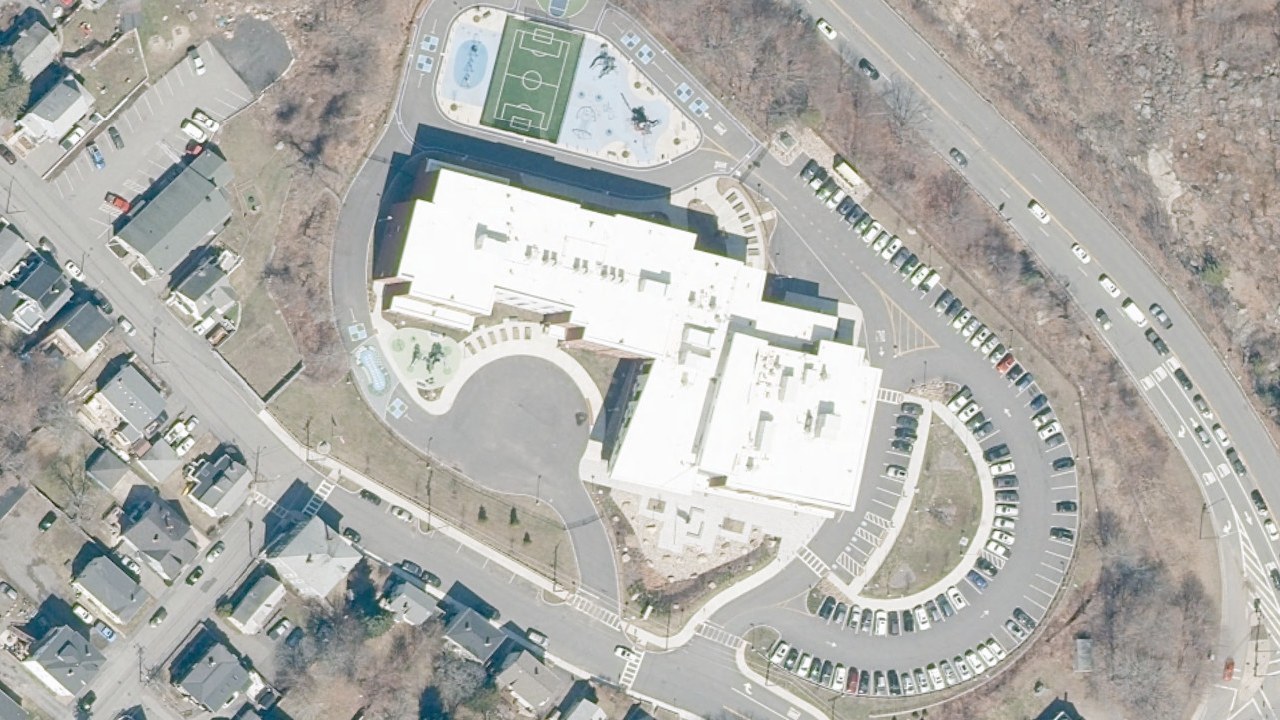
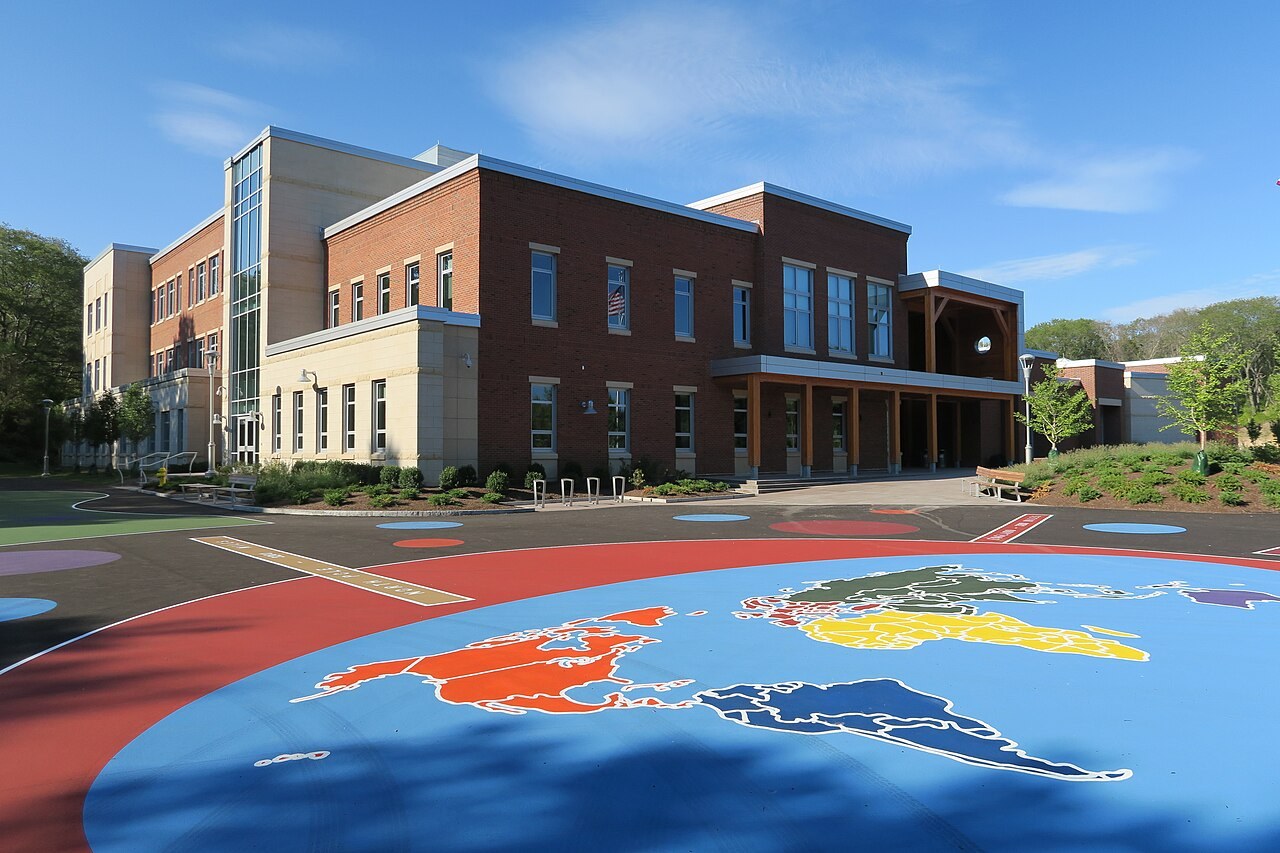
Manchester Memorial School was next. In August 2018 the state approved a grant of up to $12.3 million for a new building of about 77,000 square feet. It was planned for 335 students in preschool through grade 5 and replaced a school that opened in 1951. The new building opened in the fall of 2021 and cost about $52 million.
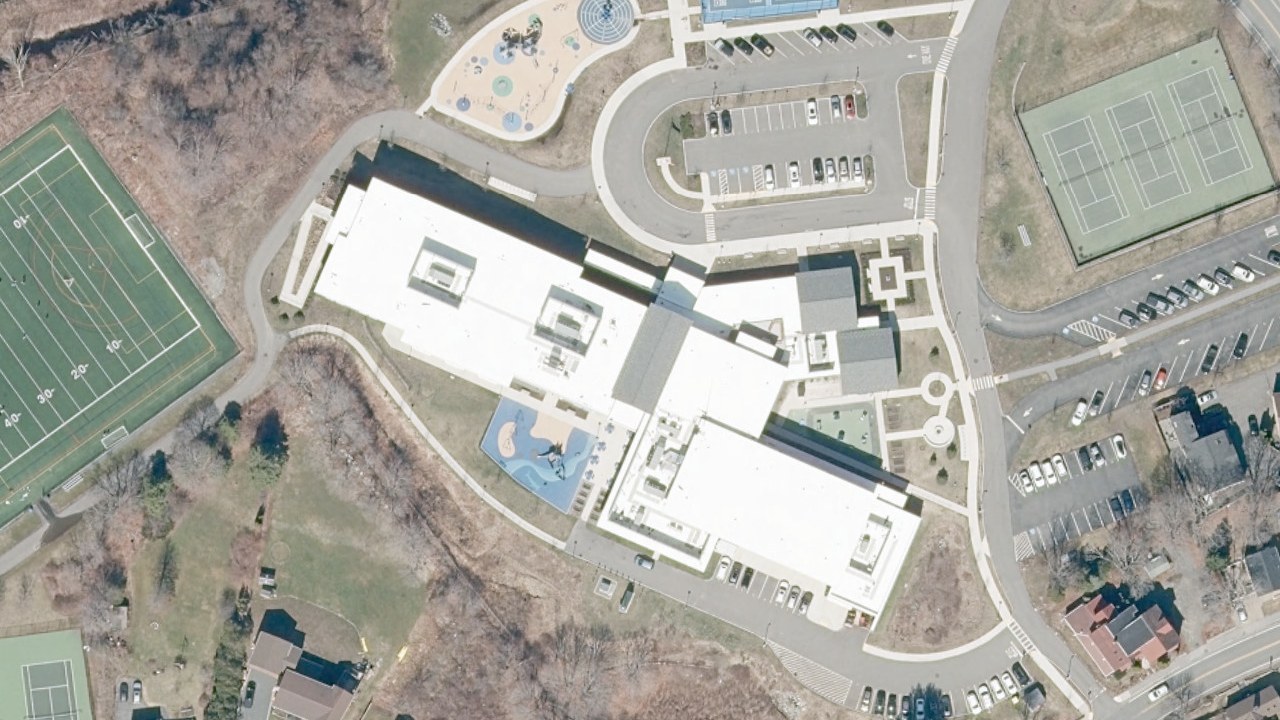
East Veterans Elementary School in Gloucester is the newest. It joined two neighborhood schools, East Gloucester and Veterans Memorial, in one building on the Veterans Memorial site on Webster Street. The building has about 87,000 square feet and was designed for 440 students. Gloucester voters approved the borrowing on Nov. 3, 2020. Construction began in the fall of 2021 and the school opened in 2023. The budget was $66.7 million.
What the new buildings add
The new schools were built around ideas the older buildings do not have. They have shared rooms for small groups and projects, libraries with space to build things, and green building standards. Here is what the records say about each one.
| School | Learning spaces | Technology | Energy and building |
|---|---|---|---|
| West Parish School, 2016 | A three story classroom building and a one story wing with the gym and a cafeteria that doubles as an auditorium. | Not listed in the building records. | Certified LEED Gold, a national green building rating. Wood beams in the main hallway recall Gloucester's shipbuilding. |
| Manchester Memorial School, 2021 | Three classroom wings reach out from a central space called the Hub. The media center and project rooms sit next to it. Outdoor learning areas. | Not listed in the building records. | LEED Gold, its architect reports. A smaller footprint than the old school left more room for play areas. |
| East Veterans Elementary School, 2023 | Paired classrooms with a movable wall between them, so two classes can join. Small group rooms and breakout space on each classroom floor. A Curiosity Commons joins the library, a makerspace for hands-on projects and the art room. | Technology equipped classrooms, the district says. | Built to reach LEED Gold and ready for solar panels, the building committee was told in November 2023. |
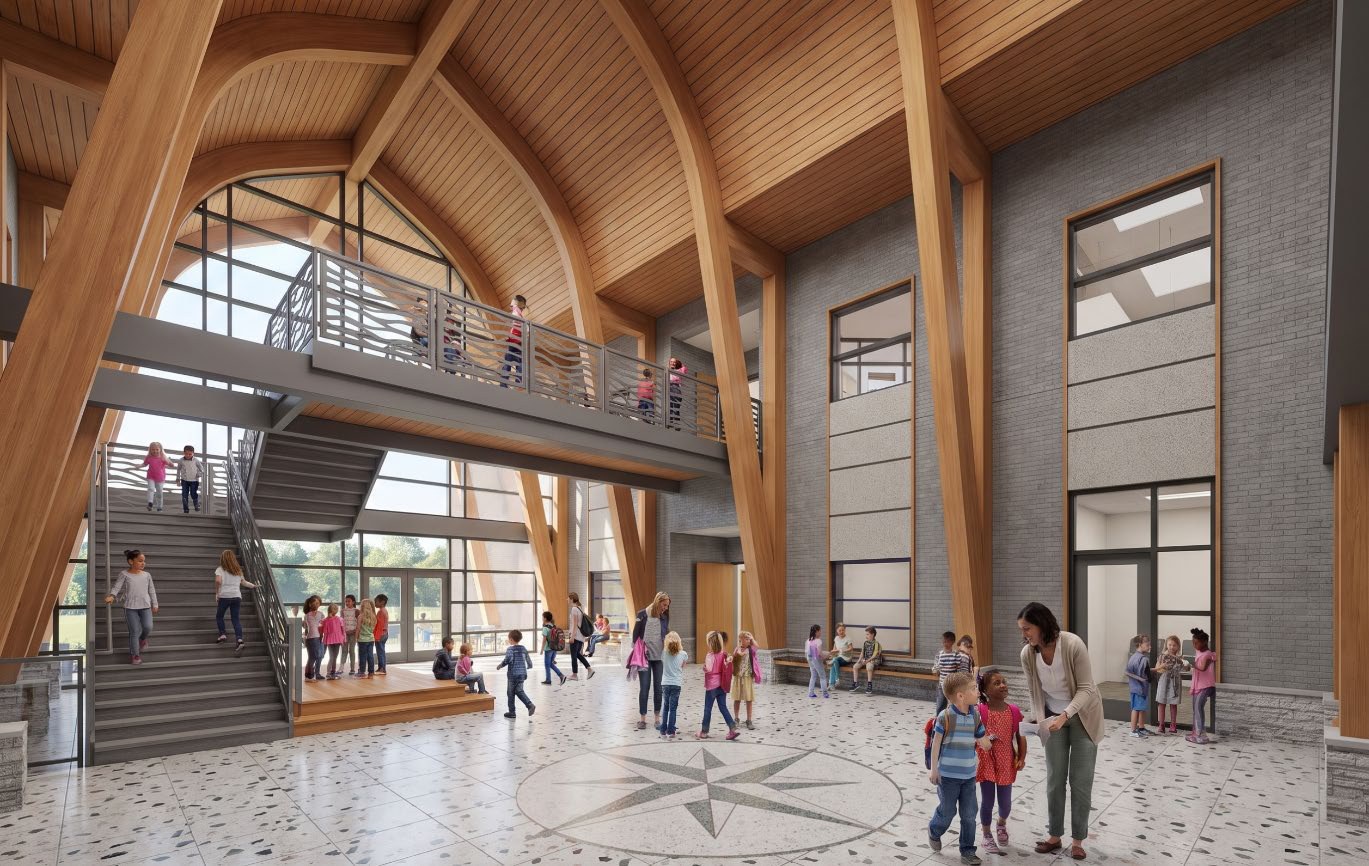
| Essex Elementary School, proposed | Two classrooms per grade, with shared breakout spaces. A project room with tables on wheels. A media center, an outdoor classroom and a central space called the Landing. | Interactive display boards, sound systems that carry the teacher's voice, document cameras and a device for every student to use in school. Wireless and charging for hundreds of devices at once. | All electric, with no gas line. Heat pumps, triple pane windows and sunshades on south facing classrooms. Aiming for LEED Silver. |
Sources: W.T. Rich Company for West Parish. JCJ Architecture for Manchester Memorial. For East Veterans, the Gloucester Public Schools project site, Dore and Whittier and MLP Integrated Design. For Essex, the school district's Schematic Design Report, October 2026. Why this comparison: the same three questions are asked of each building. Missing: the public building records for West Parish and Manchester Memorial describe the rooms and the building, not the classroom technology. The Essex column is a plan, not a finished building. Tap a column heading to sort.
The proposed Essex Elementary School
A new Essex Elementary School would be the fourth. The current school at 12 Story St. was built in 1957 and added onto in 1975. It has 55,600 square feet. It held 301 students in kindergarten through grade 8 in 1986 and 200 in kindergarten through grade 5 in October 2025. Part of that change is grades, not children: grades 6 to 8 now go to the regional middle school in Manchester-by-the-Sea.
The plan is a three story school of about 71,400 square feet on the same site. It would hold 250 students in kindergarten through grade 5 and 30 preschoolers. The budget is $95.3 million. The school district expects a state grant of about $20.9 million. Manchester-by-the-Sea would pay 66.6% of the rest and Essex 33.4%.
Both town meetings approved the borrowing on Nov. 16. Essex passed it by more than two thirds on a show of voting cards. Read what happened in Essex. Manchester-by-the-Sea passed it 289 to 86, with five voters abstaining. It needed two thirds there too. Read every Manchester vote. One step is left. Voters in both towns go to the polls Thursday, Dec. 10, from 7 a.m. to 8 p.m., to decide whether the debt can be paid outside the tax limit. Essex votes at the Public Safety Building, 11 John Wise Ave. Manchester-by-the-Sea votes at Memorial School, 43 Lincoln St. The last day to register is Nov. 30. Read what the Dec. 10 ballot question does. The district's schedule shows construction starting in May 2028 and students moving in during the summer of 2030. The current school would stay open while the new one is built.
The district's education plan for the school lists the technology in each classroom. It names an interactive display board, a sound system that carries the teacher's voice and a document camera. Every student would have a device to use during the school day. Students would not take the devices home. The plan says the building needs strong wireless and enough power to charge hundreds of devices at once. A project room would have tables on wheels, a charging cart and power cords that drop from the ceiling for hands-on work.
The main entrance, the bus entrance and the preschool entrance all lead to a central space the designers call the Landing. The building would be all electric, with no gas line. It would be heated and cooled with heat pumps and would have triple pane windows.
| School | Community | Opened | Square feet | Built for | Budget | State grant |
|---|---|---|---|---|---|---|
| West Parish School | Gloucester | 2016 | 65,679 | 355 students | $39.5 million | $14.6 million, final |
| Manchester Memorial School | Manchester-by-the-Sea | 2021 | 77,102 | 335 students | About $52 million | Up to $12.3 million, as approved in 2018 |
| East Veterans Elementary School | Gloucester | 2023 | 87,431 | 440 students | $66.7 million | Up to $26.9 million, as the district put it before the 2020 vote |
| Essex Elementary School, proposed | Essex | 2030, planned | 71,438 | 280 students | $95.3 million | About $20.9 million, expected |
Sources: Massachusetts School Building Authority announcements and project records (West Parish, Sept. 17, 2014 and June 26, 2019; Manchester Memorial, Aug. 29, 2018; East Gloucester, Dec. 11, 2019); Gloucester Public Schools, East Gloucester and Veterans school building project site; Manchester Essex Regional School District, Essex Elementary School Building Project website and Schematic Design Report, October 2026. Unit: square feet of floor area, students the building was planned for, and dollars as budgeted at the time, not adjusted for rising building prices. Why these four: they are the Cape Ann elementary schools built new or proposed since 2016. Missing: the Memorial and East Veterans grants are the amounts stated before construction, not final audited amounts. The East Veterans size is the designer's figure; the state's 2019 plan listed 89,036 square feet. The Essex count of 280 is 250 students in kindergarten through grade 5 plus 30 preschoolers. Tap a column heading to sort.
Building prices rose sharply between these projects, so the budgets above are not a like for like comparison. The Current's Oct. 7 comparison puts the older schools in 2026 prices. The Nov. 9 explainer covers what the Essex project would cost a home in each town.
What the state's population projections say
The UMass Donahue Institute prepares population projections for every Massachusetts city and town. Its Vintage 2024 series starts from the 2020 Census and runs to 2050 in five year steps. It projects fewer children ages 5 to 17 in all four Cape Ann communities by 2050, and 16% fewer statewide.
These are projections, not predictions. They assume recent birth, death and moving patterns continue. They count children who live in a community, not students enrolled in a school.
| Town | 2020 | 2035 | 2050 | Change, 2020 to 2050 |
|---|---|---|---|---|
| Gloucester | 3,466 | 2,789 | 2,119 | down 39% |
| Rockport | 748 | 453 | 379 | down 49% |
| Essex | 619 | 466 | 385 | down 38% |
| Manchester-by-the-Sea | 979 | 736 | 791 | down 19% |
| Manchester and Essex together | 1,598 | 1,202 | 1,176 | down 26% |
| Massachusetts | 1,044,156 | 910,730 | 872,939 | down 16% |
Source: UMass Donahue Institute, Long Term Population Projections for Massachusetts Cities and Towns, Vintage 2024 (sheet dated May 9, 2024), CityTown Age table. Unit: people living in the town, not students in a school. "Ages 5 to 17" adds ages 5 to 9, 10 to 14 and 60% of ages 15 to 19, an estimate. Why this comparison: it is the state's standard projection for every town and the one Part 1 used. Missing: children in private schools, charter schools or other districts are counted as residents here, not as students; small town counts can shift by a few dozen from rounding.
Where the schools are, and were
Every school, then and now
Zoom and drag. Teal pins are schools open in 2025 to 26. Gray pins are 1986 schools that are no longer open. Use the Aerial button to see the buildings and fields.
Open in 2025 to 26Opened since 19861986 school, no longer open
Pins for today's schools and the two closed Gloucester sites are the centers of the assessor's parcels in MassGIS. The three closed Rockport sites and Fuller are placed from their 1986 street addresses and are approximate. The Gloucester preschool is not pinned. Aerial: MassGIS 2025. Streets: OpenStreetMap contributors.
What the records do not show
Gaps in the public record
- The year Fuller stopped being a school. The federal list names it in 1986. The state's list, which starts in 1993 to 94, does not use the name, though a 2014 state memo places the city's preschool there.
- The year each of Rockport's three primary schools closed. The state has listed one Rockport Elementary code since 1993 to 94.
- When the Jerdens Lane buildings opened. The assessor's record gives one year, 1990, for the single parcel that holds both schools.
- Teacher counts for 1986. The federal file has a field for them, but it is blank for every Cape Ann school.
- Any school by school count before the fall of 1986.
This story shows what the records say happened over 39 years. It does not say what should happen next.
How to read these numbers
School years in this story are labeled by their fall count. "2025 to 26" means the state's Oct. 1, 2025 count. The 1986 figures are the federal government's fall 1986 membership, as each district reported it. Grade spans are as each file labeled them.
Resident children and enrolled students are different counts. A town can have more children than students, because some attend private school, charter school or another district through school choice, and Rockport in particular enrolls many children who live in Gloucester.
Earlier coverage: Cape Ann school enrollment since the 1970s (Nov. 11), the series guide with every school's enrollment since 1994. What fewer students could change (Nov. 12), Part 2. The $95.3 million Essex school vote (Nov. 9). Essex town meeting says yes to the $95.3 million school (Nov. 17). Manchester votes yes on the senior center and the $95.3 million school (Nov. 21). How the $95 million Essex school compares with other new elementary schools (Oct. 7). Cape Ann's three school budgets, side by side (Nov. 1) and Gloucester's $55.8 million school budget (Nov. 2).
How we did this: the numbers come from the 1986 to 87 federal school file, the state's enrollment data for every year since 1993 to 94, the UMass Donahue Institute's 2024 projection tables, assessor records in MassGIS, and state and district school building records. Every number carries its date and source above. Questions or corrections: [email protected].
Update, Nov. 21: Manchester-by-the-Sea's town meeting vote on the Essex school, 289 to 86, was added, along with the Dec. 10 voting hours and places. Two lines about 1986 were also changed. The story had said Manchester's high school held Manchester students only and that Essex sent its students there for high school. The 1986 federal school list does not say where Essex's high school students went, so both lines now say only that each town ran its own district. Later the same day, a paragraph on the purpose of the comparison was added, the word buildings was changed to schools wherever the story counts schools, and the Rockport Elementary row was labeled as a combined 1986 total. No number changed.
Sources
- RecordNational Center for Education Statistics, Common Core of Data, Public School Universe 1986 to 1987 (school list with membership and grade span; file psu86kn_dat.zip, layout psu86lay.txt)
- RecordNational Center for Education Statistics, State Comparisons of Education Statistics: 1969 to 70 to 1996 to 97 (NCES 98-018), Table 10, public school enrollment by state, fall 1970 to fall 1995
- RecordMassachusetts DESE, Enrollment by Grade, 1993 to 94 through 2025 to 26, open data set t8td-gens (district, school and state rows)
- RecordMassachusetts DESE, school and district profiles (enrollment by school)
- RecordUMass Donahue Institute, Long Term Population Projections for Massachusetts Cities and Towns, Vintage 2024 (population by age, 2010 to 2050)
- RecordMassGIS, Massachusetts Property Tax Parcels (assessor year built, use and owner for school parcels)
- RecordMassachusetts School Building Authority, West Parish Elementary School groundbreaking (Sept. 17, 2014: 65,679 square feet, 355 students, 1949 school)
- RecordMassachusetts School Building Authority, final audit approvals, June 26, 2019 (West Parish total project budget $39,539,111, total facilities grant $14,570,475)
- RecordMassachusetts School Building Authority, Manchester Memorial Elementary School grant (Aug. 29, 2018: up to $12,279,466, 77,102 square feet, 335 students, preschool to grade 5)
- RecordMassachusetts School Building Authority, East Gloucester Elementary School moves to schematic design (Dec. 11, 2019: combined school for 440 students on the Veterans Memorial site)
- RecordMassachusetts School Building Authority, project memos for West Parish Elementary School (Jan. 22, 2014; lists the Gloucester Preschool at the Milton L. Fuller Elementary School)
- RecordGloucester Public Schools, East Gloucester and Veterans school building project site (background and timeline, frequently asked questions: $66.7 million budget, Nov. 3, 2020 vote, West Parish opened September 2016)
- RecordManchester Essex Regional School District, Essex Elementary School Building Project website (budget, grant, town shares, current building)
- RecordManchester Essex Regional School District, Essex Elementary School Schematic Design Report, October 2026 (three stories, 71,438 square feet, 250 students plus 30 preschoolers, project schedule)
- SourceJCJ Architecture, Manchester Memorial Elementary School project page (classroom wings off a central Hub, media center and project rooms, outdoor learning, LEED Gold)
- SourceDore and Whittier, East Veterans Elementary School project page (paired classrooms with movable walls, breakout space on each floor, Curiosity Commons)
- RecordMassGIS, Massachusetts Aerial Imagery 2025 (aerial photos of East Veterans and Manchester Memorial)
- SourceW.T. Rich Company, West Parish Elementary School project page (three story building, demolition and new construction)
- SourceMLP Integrated Design, East Gloucester and Veterans Memorial Elementary School project page (87,431 square feet, 440 students)
- RecordTown of Manchester-by-the-Sea, Town Meetings and Elections page (Dec. 10 special town election: Memorial School, 7 a.m. to 8 p.m., Nov. 30 registration deadline)
- RecordTown of Essex, Town Clerk and Voting Information pages (Dec. 10 special town election, Nov. 30 registration deadline, Public Safety Building, 7 a.m. to 8 p.m.)
- SourceCape Ann Current, Manchester votes yes on the senior center and the $95.3 million school (Nov. 21; Article 5 count from the meeting video)
- SourceCape Ann Current, Schools series Part 1: Cape Ann school enrollment since the 1970s
Do you trust this story?
See something wrong? Email [email protected]. Read our standards and corrections policy.