
Cape Ann and data centers: lessons from Sutton's $16 billion fight
A 900 megawatt data center campus was proposed this month in Sutton, a town with no zoning rule for one. Here is what happened there, what data centers bring and what they cost, what Loudoun County, Va., says it learned, what Massachusetts law lets a city or town decide, and a poll for Gloucester, Rockport, Essex and Manchester-by-the-Sea.

· Thursday, November 19

Trust Check: Checked against public records
Update, Nov. 19: Gloucester now has a data center ban on the table.
The City Council agenda for Tuesday, Nov. 24 lists an order from Councilor Dylan Benson, numbered CC#2026-025, to add "Data Center" to the uses prohibited in all districts, Section 2.3.8 of the city's zoning ordinance. The meeting starts at 6:30 p.m. in Kyrouz Auditorium at City Hall. A zoning change needs a Planning Board hearing and a City Council hearing before a vote, so no final decision is due that night. Read the agenda. See where each community stands.Walk out to the edge of Halibut Point in Rockport on a clear November night and wait a few minutes for your eyes to adjust. The granite is cold under your feet. Below you the swell rolls in and breaks on the ledge, pulls back and breaks again. Behind you the old quarry is a sheet of black water. Then the sky fills in. First the bright stars, then hundreds more, and on a good night a pale band of the Milky Way.
This is where the Gloucester Area Astronomy Club brings its telescopes. Down the coast, off Rockport, the twin lights of Thacher Island shine over open water. Across the cape, the tide slides through the Great Marsh in Essex without a sound. In the middle sit the Dogtown woods, miles of boulders and trails with no streetlight at all. Gulls, a bell buoy, wind in the pines. On most nights that is all there is to hear.
Nobody voted for that quiet in a single night. It is what is left after years of choices about what gets built and where. Those choices are made in zoning, the local rules for how land can be used. That is why a meeting about 60 miles southwest of here, in the Worcester County town of Sutton, is worth the attention of Gloucester, Rockport, Essex and Manchester-by-the-Sea.
A small town with a town common
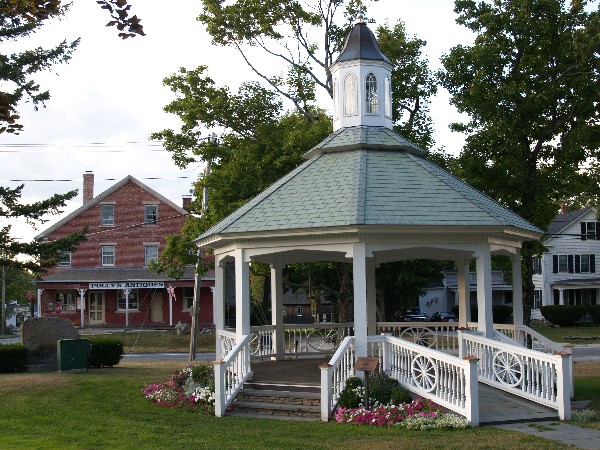

Sutton would look familiar to anyone from Cape Ann. About 9,400 people live there by the state's count, somewhat more than in Rockport. It sits in the Blackstone Valley, about 10 miles south of Worcester. Families first settled it in 1716, and the town common and cemetery at its center were laid out three years later. A white church, a gazebo and a few old buildings still ring the common. Purgatory Chasm, a state park where a trail runs between granite walls, is in town.
Like Rockport, Essex and Manchester-by-the-Sea, Sutton runs on open town meeting. Any registered voter can walk in and vote. At this month's meetings, residents talked about the town's farms, its history and its night sky.
The land in question is on the north side of town, near the Millbury line. It has been used by industry since the 1930s and once held a cement plant and a gravel pit, The Boston Globe reported. A Kraft company bought the 383 acre parcel in 2020 for $9.5 million. Large power lines already cross it.
| Source and year | ||
|---|---|---|
| Population | 9,436 | Massachusetts Division of Local Services, fiscal 2026. Rockport: 6,988. |
| Form of government | Open town meeting, five member Select Board, town manager | Town of Sutton |
| Operating budget | $46.1 million | Division of Local Services, fiscal 2026. About $4,887 for each resident. Rockport: $44.0 million, about $6,301 for each resident. |
| State school aid, Chapter 70 | $5,997,981 | State budget local aid tables, fiscal 2026 |
| General state aid | $971,775 | State budget local aid tables, fiscal 2026 |
| Property tax levy | About $32.3 million | Town of Sutton fiscal model, fiscal 2027 |
| Value of all taxable property | About $2.85 billion | Town of Sutton fiscal model, fiscal 2027. Homes are 83.6 percent of it. |
| Average single family home | $662,769 in value, $7,512 tax bill | Town of Sutton fiscal model, fiscal 2027 |
| Zoning on data centers | Not mentioned. Any use not listed is prohibited. | Sutton zoning bylaw, as read at the Nov. 16, 2026 Planning Board meeting |
Why Rockport: it is the Cape Ann town closest to Sutton in size. The state's figure for "operating budget" is the number it reports for each community and is not every dollar a town spends. Missing: the state had not posted fiscal 2027 figures for Sutton.
What happened in Sutton
On Nov. 9, Sutton's town manager sent the Select Board a memo. Two companies tied to New England Patriots owner Robert Kraft, the Kraft Group and Unified Global Packaging Group, want to build a data center campus on land Unified owns off Boston Road and Providence Road. A data center is a building full of computers that store and process information. The largest ones run artificial intelligence.
The plan calls for 10 buildings that would draw about 900 megawatts of electricity, at a cost the developer puts above $16 billion. All the taxable property in town is assessed at about $2.85 billion.
One day later, on Nov. 10, residents filled the Select Board's meeting room. Every resident who spoke in the public comment period opposed the plan or raised concerns about it. One, a father of young children, said his family moved to Sutton for land, a dark sky and a sense of community. People in the room shouted for the board to end the review that night.
The board did not vote. Its members said they had learned the details only days before and had concerns of their own. On Nov. 13 the town put out a statement that said, in part, "Considering an opportunity is not the same as supporting it." On Nov. 16 residents packed the Planning Board's meeting and gathered signatures outside on a petition to prohibit data centers. Organizers told WHDH they had more than 300. The Planning Board took no vote. Its staff will collect pause language and bylaws from other towns, and the board will wait for state guidance that is due by Dec. 31 before it drafts anything. If residents file a petition, the board must hold a hearing and send a recommendation to a special town meeting.
No application has been filed. Nothing has been approved. The key fact for Cape Ann is this: Sutton's zoning does not mention data centers at all. The town is writing its rules with a $16 billion proposal already at the door.
| What it means | ||
|---|---|---|
| Buildings | 10 | Two would open in 2029, then two more each year through 2033. Each is about 250,000 square feet. |
| Electricity | About 900 megawatts | About 90 megawatts for each building. A Sutton Select Board member said the largest data center in Massachusetts today draws about 30. |
| Cost, by the developer's estimate | More than $16 billion | Several times the value of every property in Sutton put together. |
| Property tax, first two buildings | About $10.4 million a year | Town staff estimate for fiscal 2031. The town's own model shows that amount slipping to about $8.7 million by fiscal 2034 as the computers lose value, if no more buildings are added. |
| Property tax, all 10 buildings | About $27.8 million a year | Town staff estimate for fiscal 2035. Sutton's whole tax levy this year is about $32 million. |
| Average single family tax bill | About $2,300 lower | Projected for fiscal 2031, compared with a future in which voters pass tax overrides. About $5,800 lower in fiscal 2035 with the full campus. |
| Share of all town taxes paid by one owner | 52.8 percent | The data center's projected share of Sutton's tax levy in fiscal 2035. |
| One time building permit fees | About $31 million | Town staff estimate for the full campus. |
| Town budget gap without it | $300,000 to $9.1 million | The gap Sutton projects from fiscal 2028 to fiscal 2033. |
| Water use | Not known | The developer says it is looking at reclaimed water for cooling. No amounts have been given. |
| Noise | Not known | The governor's order does not cover noise. Limits would come from a local bylaw and any agreement with the town. |
| Permanent jobs | Not known | The town's project page lists jobs among the facts not yet provided. |
| Who would run it | Not known | No operator or end user has been named. |
| Vote needed | Two thirds of Town Meeting | For any zoning change that would allow data centers. No date is set. |
Source: Town of Sutton memo and fiscal model, Nov. 9, 2026, and the town's project page, read Nov. 17, 2026. Dollar figures are town staff estimates that use values lower than the developer's. Fiscal years end June 30.
The Sutton site from above
Zoom and drag. The pin marks Unified Parkway, off Boston Road and Providence Road, on the north side of Sutton near the Millbury line. The campus is proposed on this property.
Proposed data center site
Location from the Town of Sutton's project page, placed with OpenStreetMap. Building locations are not final. Aerial: MassGIS 2025.
What Sutton's own officials said about timing
The clearest lesson came from the Select Board itself.
Board member Christine Watkins told the room that Sutton's zoning allows only the uses it lists, so a data center is not allowed today. She said a regional planning session in May had carried a warning from a land policy expert: have your bylaw written before the data center is on your doorstep. A large project with deep pockets, she said, puts a town at a disadvantage if it writes the rule and negotiates the deal at the same time.
Six days later the town's community development director gave the Planning Board a second lesson. Sutton's bylaw says any use not listed is prohibited, and the building commissioner has said a data center is not allowed. Even so, she said, a builder could apply under some other listed use and appeal a denial to the Zoning Board of Appeals and then to Superior Court. Writing a definition into the bylaw and marking the use as prohibited, she said, removes most if not all of that doubt. She also said the developer has told the town it does not want to go forward unless the community shows it may want the use.
Chair Jonathan Anderson said he had a strong dose of skepticism and warned against letting a budget gap drive the choice. "I do not want to rush this," he said. Board member Jesse Limanek, who said he lives six houses from the site, said any bylaw needs teeth and that the developer should pay for independent experts and the town's legal costs. Board member Daniel Spengler noted that the governor's order says nothing about noise. He also told residents that keeping projects like this out means being willing to pay more in taxes.
"The proposal is tentative. No application has been filed, and important details on power, water, equipment and site impacts are still to come."
Sutton Town Manager Austin J. Cyganiewicz, memo to the Select Board, Nov. 9, 2026What a data center can bring, and what it can cost
Both lists below are real. Which one weighs more is a choice for each community.
| What the record shows | Source | ||
|---|---|---|---|
| Benefit | Tax money | Loudoun County, Va., expects $1.3 billion from data centers in fiscal 2027, about 40 percent of its budget. Sutton staff project up to $27.8 million a year. | Loudoun County; Town of Sutton |
| Benefit | Lower home tax bills | Loudoun's real estate tax rate fell 30 percent from 2016 to 2026, and the county credits the industry with helping. Sutton projects average bills $2,300 to $5,800 lower. | Loudoun County figures reported by WJLA; Town of Sutton |
| Benefit | Few demands on town services | A Loudoun supervisor says data centers cost the county about 4 cents in services for every tax dollar they pay. They add no students to the schools. | Supervisor Mike Turner, his own brief |
| Benefit | Construction jobs | A Virginia state study describes about 1,500 workers at the peak of building a typical data center. | Virginia legislative study, reported by WJLA |
| Benefit | Negotiated extras | Other host communities have won guaranteed minimum tax values, community funds, public safety buildings and equipment, and limits on noise and light. | Town of Sutton memo |
| Benefit | The owner pays for its own grid costs | Under the governor's order, a data center over 25 megawatts must pay for the power lines and equipment it needs and buy new clean power or pay into a fund for ratepayers. | Executive Order 658 |
| Cost | Noise that does not stop | Cooling equipment runs day and night. Neighbors of one Loudoun site with gas turbines describe a constant hum. A Loudoun supervisor calls low, rumbling noise the hardest to control. | WJLA; Supervisor Mike Turner |
| Cost | Power lines and substations | The utility serving Loudoun announced six new transmission lines in 2023. The Sutton plan shows three substations. | Supervisor Mike Turner; Town of Sutton |
| Cost | Water | Data centers account for about 9 percent of drinking water use in Loudoun County. Use depends on how a site is cooled. | Loudoun County figures reported by WJLA |
| Cost | Backup generators | Data centers keep backup generators, usually diesel, for outages. Virginia counts about 4,700 of them in Loudoun County. | Virginia Mercury, cited in our Nov. 8 story |
| Cost | Few permanent jobs | The same Virginia study describes about 50 full time workers once a typical data center opens. | Virginia legislative study, reported by WJLA |
| Cost | Tax money that can shrink | Computers lose value fast. Sutton's model shows taxes from the first two buildings falling about 17 percent in three years if nothing else is built. | Town of Sutton fiscal model |
| Cost | Leaning on one taxpayer | At full size the Sutton campus would pay more than half the town's taxes. A Loudoun supervisor told The New York Times the county has become addicted to the revenue. | Town of Sutton; Yahoo Finance citing The New York Times |
| Cost | Light, size and an empty building later | Sutton's memo lists lighting, setbacks and a funded plan for taking the buildings down among the rules a bylaw would need. | Town of Sutton memo |
Why these places: Loudoun County has more data centers than anywhere else in the world and publishes its numbers. Sutton is the largest proposal in Massachusetts. Missing: no agency publishes water or noise figures for a single data center, and the Sutton figures are estimates, not results.
What Loudoun County says it learned
Ashburn, Va., sits in Loudoun County, about 30 miles from Washington. The area is known as Data Center Alley. County figures for 2026 show 233 data center buildings in operation and 171 more planned.
The county's own history page tells how it happened. In 2000 a zoning official decided a data center was close enough to an office that one could be built, with no public vote, anywhere offices were allowed. Planners call that "by right." For 25 years projects moved ahead without a hearing. The county now says it was hard at the start to foresee what the industry would become.
On March 18, 2025, Loudoun's Board of Supervisors voted 7 to 2 to end by right approval. Most new data centers there now need a public hearing and a vote of the board.
Supervisor Mike Turner represents Ashburn. He travels to other communities with a list of what he calls lessons. They are his own views, not the county's. Among them:
- Never allow data centers by right. Require a local vote.
- Never sign a nondisclosure agreement.
- Study noise before and after construction, and measure the low hum as well as the sound people usually notice.
- Get the power request in writing and make the builder show where the substations go.
- Get yearly water use in writing.
- Keep buildings at least 500 feet from homes. He prefers 1,000.
Residents add their own. A woman who lost a court fight over a rezoning near her home in neighboring Prince William County told WJLA that people should read their local rules before a decision is made, not after.
Loudoun's story has two sides. The county says data center money has let it lower its real estate tax rate every year since 2016. Some of its neighborhoods also live with hum, new power lines and steady construction.
What Massachusetts law lets a city or town decide
Here is the legal ground as of Nov. 17, 2026. This is a summary, not legal advice.
Cities and towns write their own zoning. State law, chapter 40A, lets each community decide which uses are allowed and where.
The state protects some uses. Data centers are not among them. Section 3 of that law lists uses a community may not ban or may only lightly regulate. The list includes farms, churches, nonprofit schools, child care centers, solar panels and certain backyard apartments. Data centers are not on the list. Sutton's planning staff said the same thing in September, in notes a Select Board member read aloud: data centers are not a protected use that every community must allow.
Bans and tight limits are already on the books. The Attorney General must review every town bylaw. In January her office approved a Shutesbury article that paused data centers and listed them as a prohibited use. Mansfield voters capped data centers at 2 megawatts in May. Holyoke's City Council banned large artificial intelligence data centers in June, and Salem's council voted in October to bar them.
The governor has backed local control, for now. Executive Order 658, signed Sept. 8, says state agencies will not issue permits for a data center over 25 megawatts without local approval and a community benefits agreement. An executive order can be changed or ended by a future governor.
There are limits. A pause must be short and tied to real planning. Sutton's community development director told the Planning Board that the data center pauses approved so far run about a year. The Attorney General's Shutesbury letter warned that a moratorium cannot be stretched out without end. Her review is narrow, and a court could still hear a challenge from a landowner. In Essex and Manchester-by-the-Sea, a use that is not listed is not allowed, but a building inspector could decide that a data center fits a category that is listed.
| What it does | |||
|---|---|---|---|
| Essex | Pause | Nov. 16, 2026 | Town Meeting voted by more than two thirds to allow no data centers until Jan. 1, 2028, and added a definition. The Planning Board said it will bring rules to one of the next two town meetings. |
| New Bedford | Ban with no end date | Announced Nov. 13, 2026 | The City Council passed the mayor's ordinance to prohibit data centers in every zoning district while planners study rules. Before the vote, city zoning allowed them as a general business and office use with no extra review. The mayor said the ordinance gives the city time to learn from other places. |
| Salem | Ban | Oct. 8, 2026 | The City Council defined data centers and made clear they are not allowed. Server rooms inside other businesses are exempt. |
| Leominster | Pause | Sept. 28, 2026 | The City Council voted 8 to 0 to pause data centers through July 31, 2027. |
| Southborough | Special permit rules | Approved by the Attorney General in late August 2026 | Requires a special permit, two neighborhood meetings and a 1,000 foot setback next to homes or conservation land. The Attorney General cautioned that the meetings cannot be used to block an application from being filed. |
| Westfield | Pause | July 6, 2026 | The City Council voted for a 365 day pause on new data centers. |
| Holyoke | Ban on large sites | June 16, 2026 | The City Council voted 9 to 4 to ban artificial intelligence data centers over 12 megawatts. An existing research computing center is exempt. |
| Mansfield | Cap | May 5, 2026 | Town Meeting allowed data centers up to 2 megawatts by special permit in some districts and barred larger ones, with noise limits and five year permits. |
| Lowell | Pause | March 10, 2026 | The City Council voted 10 to 0 for a 360 day pause, with a possible 180 day extension. |
| Shutesbury | Pause and prohibition | Sept. 30, 2025 | Special Town Meeting paused data centers until June 20, 2026, defined them and listed them as a prohibited use. The Attorney General approved the article Jan. 20, 2026. |
Why these places: each has a recorded vote or an Attorney General decision. Sources: the Attorney General's Shutesbury letter, Cape Ann Current coverage of Essex Town Meeting, the City of New Bedford's Nov. 13 statement, The New Bedford Light, and local reports gathered by SignalData, Boston.com, GBH, Government Technology and My Southborough. Missing: vote counts for Mansfield, Shutesbury and New Bedford were not reported, and proposals still pending in other communities are left out.
Could the state take the choice away?
It has done so for other uses. State law requires communities served by the MBTA to zone for apartments, and the state's highest court upheld that rule in 2025. State law now allows one small backyard apartment on a lot in single family zones across the state. Solar panels, child care centers, churches and nonprofit schools have been protected from local bans for years.
For data centers, the state has so far moved in the other direction. The governor's order backs local approval. A state senator's proposal for a one year statewide pause was withdrawn in July after it met resistance from Senate leaders, CommonWealth Beacon reported. A committee has filed a proposed 2028 ballot question that would require a two thirds vote of local residents for any new data center. It plans to gather signatures next fall, The Boston Globe reported.
Elsewhere, the pressure runs toward less local control. West Virginia has passed a law that blocks local governments from regulating data centers. At least nine states have weighed 12 bills in two years to curb local say over data centers and artificial intelligence, according to the Local Solutions Support Center, a national group that tracks such laws.
Money is part of the picture. In California, utilities and technology companies spent millions of dollars lobbying in the first half of 2026 as lawmakers took up seven data center bills, a CalMatters review found. In Massachusetts, the Legislature in 2024 passed a sales tax break for large data centers that can last 20 years. State lobbying records show that in 2022 the developer of a proposed Westfield data center campus and a regional development group were the only ones to report lobbying on a bill to create that tax break, The Shoestring reported. The governor paused applications for the tax break in June.
No one can say what a future Legislature or governor will do. What is known is that a rule adopted by a town meeting or a city council stays in place until that body, a court or a new state law changes it.
Why the coast comes up
Some companies are looking to the sea. Seawater can cool computers without using drinking water. China runs commercial data centers on the seabed off Hainan and Shanghai. A floating data center sits on a barge at the Port of Stockton in California. Japan is testing floating sites and Singapore is building one that is set to open in 2028. Trade writers caution that the idea is ahead of the engineering, and that repairs, cables and permits remain hard problems.
Massachusetts has a tie to this world already. A transatlantic internet cable called Amitié comes ashore at the Lynn and Nahant line, about 18 miles from Gloucester, and connects to a data center in Boston.
No ocean or shoreline data center has been proposed on Cape Ann or anywhere in Massachusetts that the Current could find. Cape Ann also has limits a builder would face. Its region was in a critical drought in May, and the state must license anything built in tidal water.
Where Cape Ann stands today
| What the rules say now | Who would change them | ||
|---|---|---|---|
| Gloucester | No. A ban is proposed. | The use table has no line for a data center. A use that is not expressly allowed is prohibited, but the building inspector could place a data center under a listed category such as manufacturing or research. No ruling has been made public. An order on the Nov. 24 City Council agenda, CC#2026-025 from Councilor Dylan Benson, would add "Data Center" to the uses prohibited in all districts. | City Council, after a Planning Board hearing |
| Rockport | No | Data centers are not in the use table, and the bylaw has no line that bans unlisted uses. | Town Meeting, by a two thirds vote |
| Essex | Yes, as of Nov. 16 | Town Meeting added a definition and voted to allow no data centers until Jan. 1, 2028 while the Planning Board writes rules. Town bylaws go to the Attorney General for review. | Town Meeting, by a two thirds vote |
| Manchester-by-the-Sea | No | Any use not listed is prohibited. The Planning Board added data centers to its list of topics on Nov. 9 after a notice from Beverly. | Town Meeting, by a two thirds vote |
Source: each community's zoning as read for our Nov. 8 story, the Nov. 16 Essex Town Meeting and the Nov. 9 Manchester Planning Board meeting and the Gloucester City Council agenda for Nov. 24. No data center has been proposed in any of the four. On Nov. 4, a company laying fiber optic cable for Applied Materials in Gloucester was asked at a city meeting whether a data center was coming and said no.
Lessons for both sides
For cities and towns
- Name the use. "Not listed" leaves the call to one official and to the courts. A definition and a clear yes or no does not.
- Decide before a proposal arrives. Sutton's board members said writing a rule beside a live deal puts a town at a disadvantage.
- A short pause is allowed. The Attorney General has approved pauses that have an end date and a study plan.
- Write limits that can be measured. Megawatts, decibels at the property line, gallons a year, feet from homes.
- Make the applicant pay for the town's experts. Sutton plans to do so through a review account the developer funds.
- Do not let a budget gap set the pace. Sutton's chair said fear of a tax override leads to bad choices.
For data center builders
- Come with answers. In Sutton the water, noise, jobs and operator were all unknown when the public first heard the plan.
- Expect the zoning question first. Where the use is not listed, nothing moves until voters change the rule.
- Size matters. A Sutton resident leading the petition told WCVB a smaller project might be something the town would consider.
- No secrets. A Sutton board member asked in public whether the town was under any nondisclosure agreement. The answer was no. The state bars its permitting agencies from signing them.
- Put promises in a form the town can enforce. Minimum tax payments, noise limits and money set aside to remove the buildings.
- Two thirds is a high bar. In a Massachusetts town, the neighbors hold the vote.
If you have a strong view either way
A community that wants data centers and a community that does not have the same next step: say so in the zoning before someone else frames the question.
- In Rockport, Essex and Manchester-by-the-Sea, zoning changes are voted at Town Meeting after a Planning Board hearing. The Planning Board or the Select Board can propose one. So can residents: state law lets 10 registered voters put a zoning change before an annual town meeting.
- In Gloucester, zoning changes go to the City Council after a Planning Board hearing. State law lets 10 registered voters petition the council for a change. One is now filed: a councilor's order to prohibit data centers in every district is on the council's Nov. 24 agenda. Residents can speak at the public hearings that follow.
- Essex has until Jan. 1, 2028. Its Planning Board has said it will bring permanent rules to one of the next two town meetings.
- State guidance for cities and towns on data centers is due by Dec. 31, 2026 under the governor's order.
A rule can say yes as clearly as it can say no. A community that wants the tax money can name the district, set the size and the limits and require a special permit. A community that does not can ban the use by name. Either way, the rule is written by the people who live there.
Cape Ann Poll: data centers where you live
Are you for or against data centers in your community, and what should the zoning say? One vote per connection, checked on our server. Results show as soon as you vote, for each community, with a margin of error that updates as votes come in. This is not a scientific survey, and the poll explains why. The Current publishes totals only.
Write to your elected officials
The tool below writes a message for you from the public record in this story. Pick where you live and whether you are for data centers, against them or want to ask what your community will do. It runs in your browser, and nothing you type is sent to or stored by the Cape Ann Current. Messages sent to public officials become public records.
Earlier coverage: Data centers and plate reader cameras: what each Cape Ann community has on the books (Nov. 8). Essex and Manchester town meeting results (Nov. 17). Essex Planning Board backs a data center pause (Oct. 24). Manchester Planning Board, Nov. 9 (Nov. 11). Haffner's Way, Part 5: can the Planning Board limit the use? (Nov. 15).
How we did this: Cape Ann Current read the Town of Sutton's memo, fiscal model and project page, watched the Sutton Select Board meeting of Nov. 10 and the Planning Board meeting of Nov. 16 online, and read the state laws, the governor's order, the Attorney General's letter and the reports listed below. Statements by officials, residents and companies are reported as their positions. The Current takes no position on data centers or on any community's rules. Public records did not show how much water or electricity a data center of any size could draw on Cape Ann, or whether any bill now before the Legislature would change local zoning power over data centers. Questions and corrections: [email protected].
Sources
- RecordTown of Sutton: Unified Parkway data center project memo and fiscal review, Town Manager to Select Board (Nov. 9, 2026)
- RecordTown of Sutton: Proposed data center project page (status, timeline, who decides)
- RecordTown of Sutton: Select Board meeting recording, Nov. 10, 2026
- RecordTown of Sutton: Planning Board meeting recording, Nov. 16, 2026
- SourceNBC Boston: Sutton shares why it's considering huge Kraft-backed data center proposal (town statement, Nov. 13, 2026)
- SourceBoston.com: Sutton residents voice fierce opposition to proposed $16 billion Kraft data center (Nov. 11, 2026)
- SourceBoston Globe: A Sutton town official raised the idea of a data center before the Krafts did (Nov. 12, 2026)
- SourceWCVB: Sutton residents continue ardent opposition to Kraft-backed data center (Nov. 16, 2026)
- SourceWHDH: Residents collect signatures for petition to prohibit data centers (Nov. 16, 2026)
- RecordMassachusetts Executive Order 658 (Sept. 8, 2026)
- RecordMassachusetts General Laws chapter 40A, section 3 (uses zoning may not prohibit)
- RecordMassachusetts General Laws chapter 40A, section 3A (MBTA communities)
- SourceWBUR: State high court upholds the MBTA Communities Act (Jan. 8, 2025)
- RecordMassachusetts General Laws chapter 40A, section 5 (how zoning is adopted and changed)
- RecordAttorney General letter approving Shutesbury's data center article (Jan. 20, 2026)
- RecordAttorney General: the Dover Amendment and protected uses
- SourceSignalData: Data centers in Massachusetts, local actions with sources (read Nov. 17, 2026)
- SourceGovernment Technology: Salem, Mass., leaders approve data center ban (Oct. 2026)
- SourceGBH: Salem zoning board rejects developer's plan for data center (Sept. 16, 2026)
- SourceBoston.com: Mansfield becomes first town in Mass. to pass near-total ban on data centers (May 13, 2026)
- SourceMy Southborough: AG's approval of recent town zoning changes came with cautions (Sept. 2, 2026)
- SourceBoston Globe: Mass. ballot question would put major restrictions on data centers (Nov. 12, 2026)
- SourceCommonWealth Beacon: A proposed moratorium on data centers hits resistance in Mass. Senate (July 24, 2026)
- SourceCommonWealth Beacon: Data centers get their tax breaks (2026)
- SourceThe Shoestring: Proposed Westfield data center appears abandoned by developers (Dec. 30, 2025)
- SourcePrism: More states are trying to block cities from regulating AI data centers (May 18, 2026)
- SourceCalMatters: The data center backlash is here, and Big Tech is spending big to combat it (Aug. 28, 2026)
- RecordLoudoun County, Va.: Data Centers: The Loudoun Story
- RecordLoudoun County, Va.: Data center fact sheet and timeline
- RecordLoudoun County, Va.: Data centers resident guide (tax rate lowered every year since 2016)
- RecordLoudoun County Supervisor Mike Turner: Data center brief (July 1, 2026; his own views)
- SourceWJLA: Data center boom: what Virginia communities should ask before saying yes (Oct. 2026)
- SourceYahoo Finance: Loudoun County raked in $1.1 billion in tax revenue from data centers (Aug. 23, 2026)
- SourceThe Conversation: AI companies look to the ocean as a place to put more data centers (Sept. 2026)
- SourceCleanTechnica: Underwater data centers are real, but the hype is getting ahead of the engineering (June 1, 2026)
- SourceData Center Knowledge: The rise of floating data centers (April 27, 2026)
- RecordAqua Comms: Completion of the Amitié transatlantic cable, landing in Lynn (2023)
- SourceWikipedia: Sutton, Massachusetts, and Sutton Center Historic District (settlement in 1716, common laid out in 1719, open town meeting)
- RecordMassachusetts Division of Local Services: operating budget and population by community, fiscal 2026
- RecordMassachusetts fiscal 2026 budget: local aid by community (Section 3)
- SourceClear Sky Chart: Massachusetts observing sites (Halibut Point, Gloucester Area Astronomy Club)
- RecordCity of New Bedford: Mayor proposes prohibition on data centers, citing noise and other impacts (Sept. 2026)
- SourceThe New Bedford Light: New Bedford advances measure to ban data centers (Oct. 27, 2026)
- SourceWJAR: New Bedford City Council passes ban on data centers (Nov. 13, 2026)
- RecordCity of Gloucester: City Council agenda for Nov. 24, 2026 (order CC#2026-025)
Do you trust this story?
See something wrong? Email [email protected]. Read our standards and corrections policy.